Remembering Stephen Munzer: A ‘gentleman’ scholar of law and philosophy
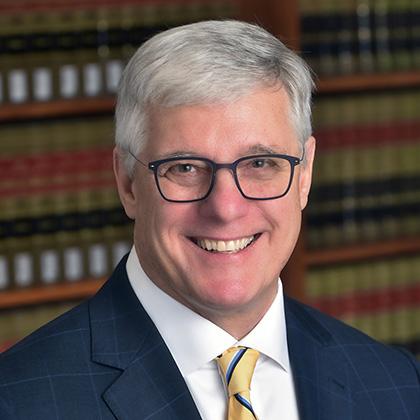
Members of the UCLA School of Law community are mourning the loss of longtime professor Stephen Munzer, who died on Nov. 30 at age 81 after a brief illness.
Munzer was a distinguished research professor and authority in law and philosophy who joined the law school’s faculty in 1982 and retired in 2014 – but hardly stopped writing, teaching, conducting research, and connecting with his colleagues. Many people among his family, coworkers, and former students have used the same word to describe him: “gentleman.”
“Steve was an outstanding scholar, and his presence radiated positivity. He was a major figure at UCLA Law for decades, and he was important to so many in our community. His reputation was sterling, and I have heard from several people who were touched as much by his warmth and collegiality as they were by his incredible intellect,” UCLA Law dean Michael Waterstone wrote in a message to the community. “In many ways, he embodied the spirit and excellence of UCLA Law – full of energy, precise but gracious in his criticisms, serious in his mentorship, and humble in offering up his exceptional work.”
A preeminent scholar of law and philosophy, Munzer was known for having a boundless inquisitiveness and broad academic interests that ranged from contracts to Christian theology to anatomy to sports. His 1990 book, A Theory of Property, was a landmark, and he earned multiple honors throughout his career. He received a National Endowment for the Humanities fellowship in 1991. The American Philosophical Association awarded him the David Baumgardt Memorial Fellowship for 1997-98 and the Berger Memorial Prize in 1999. And in 2009, the association published a tribute to his work on legal philosophy and biotechnology.
“He was a model colleague in so many ways – a deeply intellectually serious person with tremendous curiosity about all range of subjects,” says Munzer’s longtime colleague Seana Shiffrin, the Pete Kameron Professor of Law and Social Justice, whom Munzer supported from the start of her career when, among other things, he included her scholarship in the 2001 book that he edited, New Essays in the Legal and Political Theory of Property.
“He worked incredibly hard, and he was candid, rigorous, and very supportive. He was open-minded, and listened really carefully,” Shiffrin says. “I appreciated that he was so devoted to learning about ways of life that were alien to him so that he could understand them better. He would spend time immersed in points of view and work quite distant from his standard wheelhouse.”
A native of Topeka, Kansas, Munzer traveled far. He was a graduate of the University of Kansas, Yale Law School, and Oxford University, where he was a Rhodes Scholar, and came to UCLA Law after teaching at Rutgers University, the University of Minnesota Law School, and Columbia University.
Over more than four decades, he forged a true Bruin family, encompassing a wide range of colleagues from across the law school and university. Staff members recall him as a sunny and devoted coworker who would greet them by name in the hallways and show up at department celebrations. Notably, he developed lasting bonds with several law librarians and library staffers on whom – well into his retirement – he frequently relied to track down interlibrary loans about a vast number of esoteric topics.
Those included books about and related to biotechnology, which was the subject of a popular seminar that he taught in recent years. That followed decades of teaching legal philosophy, Contracts, and Property. Students appreciated and admired him.
“He was a fabulous instructor,” says leading entertainment attorney Lev Ginsburg ’02, whose 1L section had Munzer as its Property professor. “He absolutely loved obscure subject matter and took a joyful glee when parsing maddeningly narrow rulings, especially from judges who struggled to simply declare what was and was not a property right in the first place. An old case about the water level on the Willow River comes to mind here, as does a really weird one he made us read about amputated body parts. I can still see his little grin as he scanned around the room for a [student] with whom to begin his discussion of that one.”
Ginsburg recalls how Munzer sought to connect with his students on a deeper level, notably when he returned from his own father’s funeral and spent a few minutes of class time sharing stories about their relationship. “I’ll be forever grateful,” Ginsburg says, “that Professor Munzer trusted us, both with his scholarship and with his memories.”
Munzer's survivors include his wife, Cindy Trangsrud; his three children, Christina, Alison, and Erik; his son-in-law, Grant Milthorpe; and his two grandsons, Rhys and Ciaran Milthorpe.
In a separate obituary, they emphasized his vibrancy, sense of humor, athleticism, and adventurous spirit. He was, they wrote, “an exceptionally generous, spiritual, kind, and fair man.”
Munzer’s funeral will be held on Thursday, Dec. 11, at 9 a.m. at Forest Lawn - Hollywood Hills. His family asks that, in lieu of flowers, people consider donating to People Assisting the Homeless (PATH).