Sam Ennis ’10 on the ‘responsibility and privilege’ of representing sovereign nations
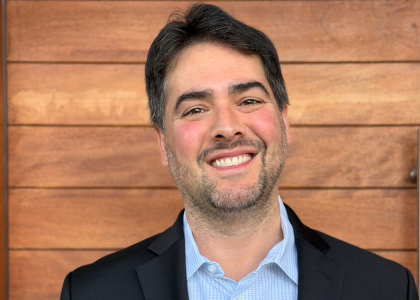
When Sam Ennis ’10 began his legal studies at UCLA School of Law, Indian law wasn't on his radar – growing up in Pittsburgh, Pennsylvania, there were no federally recognized tribes in his state. However, a chance encounter with a Ninth Circuit tribal court criminal jurisdiction case during a summer internship sparked a few questions, setting Ennis on an unexpected career path.
"I had no idea that Indian tribes had their own court systems that exercised jurisdiction over non-members," says Ennis, who now serves as associate general counsel for the Central Council of the Tlingit and Haida Indian Tribes of Alaska. "I emailed a friend from UCLA who was an enrolled tribal member and asked some basic questions, and I was so interested in the field that I sat in on a Federal Indian law course as a guest just to learn more."
He never looked back. Ennis sought out courses with leading scholars in the field: Angela R. Riley, professor and expert in the rights, cultural property, and governance of Indigenous peoples, and Carole E. Goldberg, founding director of the Native Nations Law and Policy Center. He also immersed himself in experiential opportunities, like working with the Tribal Legal Development Clinic to provide critical legal services directly to Indian tribes.
Since graduation, that initial spark of curiosity has led Ennis from private practice at a leading federal Indian law firm to the Department of the Interior's Office of the Solicitor, Division of Indian Affairs. Now, serving Tlingit & Haida directly, Ennis has come to appreciate how fortunate he was to have been introduced to the federal Indian law community at UCLA.
"It's impossible to understand what it means to work with or for Indian tribes until you actually work with or for Indian tribes," he says. "No classroom docket can prepare you for the responsibility and privilege associated with representing sovereign nations with their own histories, cultures, judicial systems, and interests." That said, UCLA was nevertheless the perfect environment to prepare Ennis for a career in federal Indian law. “I could have read that Ninth Circuit case while attending any law school. But at UCLA, I was able to cultivate that interest with an incredible community of Native students, internationally renowned federal Indian law scholars, institutional support from tribes through the Tribal Legal Development Clinic, and multiple Indian law courses. It couldn’t have happened at a better place.”
That responsibility is reflected in the wide range of issues Ennis encounters daily. On any given day, he might review state Medicaid enrollment requirements for a tribal health program, respond to a state court subpoena affecting a tribal official, explain why his client is exempt from municipal sales tax, or assist tribal members with their estate documents. Meanwhile, Tlingit & Haida, like other tribes nationwide, engages in broader legal projects: negotiating gaming developments, engaging with the federal government to obtain funding streams and defend the Tribe’s interests as appropriate, and navigating Alaska's distinct legal landscape around land into trust and tribal jurisdiction, among many others.
"When your client is simultaneously a government, business operator, health care provider, tax authority, and judicial system, you have to be able to adapt to novel fact patterns in areas of the law with which you have no experience whatsoever," Ennis says. "Even after 15 years in practice, I find it very challenging but ultimately rewarding."
What makes tribal advocacy particularly complex is that legal expertise alone isn't enough. For each tribe, Ennis must understand applicable treaties, statutes, executive orders, and legislative history that shape that tribe’s legal relationship with the United States and the state in which the tribe is located. More critically, he must learn each tribe's cultural history and practices — an ongoing process of inquiry and listening.
"Tribal history, culture, and values are intertwined with federal Indian law," he says. "You can't effectively advocate for tribes in a black-and-white legal vacuum."
Especially as a non-tribal member, Ennis understands that effective representation must reflect the specific goals and background of each tribe.
"Tribes are sovereign entities whose leadership determines how each tribe will exercise self-governance on behalf of its citizenship," he says. "As an attorney, my role is to do everything I can to effectuate tribal leadership's proposed exercises of sovereign authority."
That philosophy guides Ennis's work with Tlingit & Haida, where he helps tribal leadership translate their vision into action — asking the right questions to understand their goals, then finding creative legal pathways to achieve them.
For students interested in entering the field, Ennis emphasizes that curiosity about the breadth of Indian law will serve them well. Federal taxation, environmental compliance, procurement, and contracting issues all intersect with tribal law. Opportunities exist not just at Indian law firms or tribal governments but at federal agencies, state and local governments, nonprofits, and even large law firms.
"While it may be true that Indian law hiring requires some creativity," he says, "the opportunities are there if you know where to look."