
A year ago, Kimberly Clausing, the Eric M. Zolt Chair in Tax Law and Policy at UCLA School of Law, sat down with us to explain what tariffs are, how they work, and why their broad use was cause for concern. Since then, the trade landscape has shifted dramatically — with sweeping new tariffs, a landmark Supreme Court ruling, and mounting evidence of economic fallout.
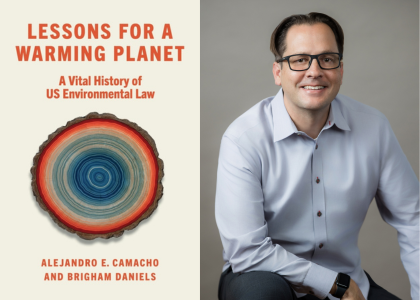
This Earth Day, environmental advocates are looking backward as well as forward. With the U.S. federal government so dramatically overhauling environmental policy, history shows how American social movements of the 19th and 20th centuries overcame seemingly insurmountable odds to preserve public lands and pass laws protecting human health.
-
J.D Environmental Law
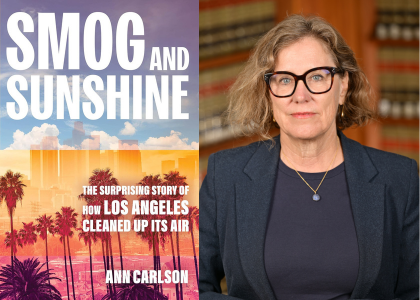
Los Angeles is famous for both sunshine and smog. It turns out that the two are related: Ozone pollution is caused by the interaction of sunlight and the chemicals that come out of vehicle tailpipes and factory smokestacks. But when Ann Carlson’s family moved to Southern California, nobody knew what caused smog, and there were no laws to prevent it. “I lived through the smoggiest decades of Los Angeles,” she says, “and I’m always struck by how few people understand just how bad the air was and what we’ve accomplished to clean it up.”
-
J.D Environmental Law

UCLA School of Law professor Rick Hasen has been awarded a 2026 Guggenheim Fellowship to support his work on his forthcoming book Unbent Arc: The Rise and Decline of American Democracy 1964-2024 (Princeton University Press, 2028).
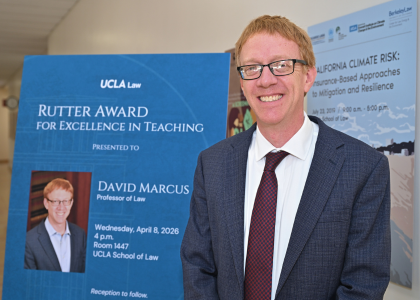
Surrounded by faculty colleagues and devoted students, UCLA School of Law professor David Marcus was honored on April 8 at an event where he received the Rutter Award for Excellence in Teaching, the law school’s highest accolade for work in the classroom.