Date: Wednesday, March 4
Time: 4:00pm, followed by a reception
Location: UCLA School of Law, Room 1447
RSVP here: https://forms.gle/vrcYiaBhEzsfsTHK8
Prof. Alex Wang will discuss his new book Chinese Global Environmentalism, in conversation with Mary Nichols.
Books will be available for purchase before and after the event.
We find ourselves in a remarkable moment in global environmental governance. China is actively promoting green development on the global stage, while the US under Trump has rejected the Paris Agreement and actively opposes the development of renewable energy and electric vehicles. Prof. Alex Wang’s talk will examine how China came to embrace green development and the ways in which China promotes a developmental form of environmentalism through green ideology, diplomacy, economic statecraft, and international development cooperation. China’s approach promises to reinforce certain global norms, while reshaping others in ways that that exacerbate geopolitical tensions.
This is the inaugural event under the Walter & Shirley Wang Endowed Chair in U.S.-China Relations & Communications
Cosponsors: UCLA Emmett Institute on Climate Change & the Environment; UCLA Asian American Studies Center; UCLA Center for Chinese Studies; and UCLA International & Comparative Law Program
Please contact Heather Morphew, morphew@law.ucla.edu with any questions.
Register now
The UCLA Emmett Institute's 2026 Spring symposium will focus on the interplay between affordability and environmental regulation, paying particular attention to recent developments in three areas: electricity generation and pricing, the transition away from fossil fuel extraction, and affordable housing.
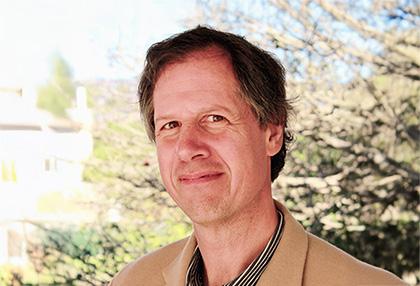
UCLA School of Law professor James Salzman has been honored with an invitation to join the Rockefeller Foundation’s Bellagio Center’s 2027 Residency Program, one of the world’s most esteemed and highly selective projects for confronting complex challenges in science, law, government, the arts, and more.
The agricultural industry in California and other states relies heavily upon chemical pesticides for a range of high-value crops to control pests, such as insects, weeds, and other problems. Many of these pesticides contain toxic active ingredients which evaporate into the air, seep into the soil and groundwater, or remain as residue on crops. In California, this usage is pervasive; in 2022 more than 160 million pounds of pesticide active ingredients were applied to land in California for agricultural purposes.
-
J.D Environmental Law
The California coastline is known for its natural beauty, recreation opportunities, world-class developments and — increasingly — conflict. In many places up and down the state, continued development at the coast contravenes both the letter and the intent of the California Coastal Act, but local communities remain deeply divided about how to plan for the growing impacts of sea level rise.
California’s gas distribution network is becoming increasingly expensive to maintain. At the same time, the state has explicitly signaled its desire to move away from natural gas in favor of electrification. To further public policy goals and achieve an equitable energy transition, mechanisms to redirect funding from gas infrastructure repairs to electrification investments should be explored.
-
J.D Environmental Law