In UCLA Law’s Veterans Legal Clinic, students serve those who served
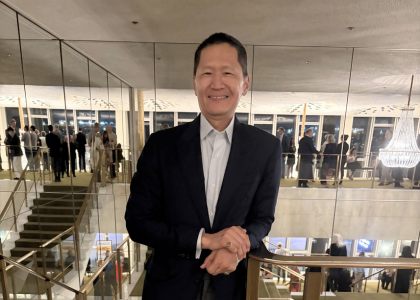
During his active-duty service with the Army, Aaron Bauer ’20, a college graduate with a degree in near eastern studies, had no designs on becoming a lawyer. “It was about two years into my time that I started working alongside military attorneys,” says Bauer, a captain who was second-in-command of a 50-soldier equipment maintenance company at Fort Irwin, in California’s Mojave Desert. “I enjoyed the investigative work and the writing, and it just clicked.”
That realization set him on a path to UCLA School of Law, where he would soon engage in a deeply personal form of advocacy: helping fellow veterans navigate the complex and often frustrating system of federal benefits.
Bauer enrolled in the Veterans Legal Clinic at UCLA Law, which launched in 2017 to put students on the front lines of legal aid for former service members. Each semester, up to 10 students are selected to participate in the clinic, which is housed on the VA campus in West Los Angeles. It is a signature part of the law school’s trailblazing clinical education program and a shining example of UCLA Law’s founding mission – service, opportunity, and excellence – in action. Even more noteworthy: many of the students who have participated in the clinic during its decade of work are themselves veterans.
“The Veterans Legal Clinic was a big part of why I chose to attend UCLA Law,” Bauer says.
Bauer now lives in Chicago, where he is an in-house lawyer for the grocery retailer Aldi. Reflecting on his time in law school, his mind quickly turns to one of his clinic clients, a man who has enjoyed remarkable success since the Veterans Legal Clinic helped him put his life back on track.
How one client got the help he needed
Ryan Cameron served in the U.S. Navy during the 1990s, suffered PTSD, and spent two decades intermittently and then chronically homeless. After a Los Angeles law firm referred him to the UCLA Law clinic, he received vital help from Bauer and Yuri Han ’20, who helped Cameron secure a special tax-free monthly benefit that goes to veterans with disabilities.
But the clinic students didn’t just help Cameron navigate paperwork. When Bauer and Han recognized that Cameron should have been getting even more benefits for his disability, their successful efforts on his behalf netted him thousands more dollars per year and, just as importantly, eligibility for benefits that cover college tuition.
With that boost, Cameron got on his way, and he soon earned his undergraduate degree at UCLA and master’s of social work at USC. Now, he plans to pursue a doctorate and devote himself to social work. But the help that he got from the UCLA Law students is never far from his mind, and to this day, Cameron readily refers other veterans to the clinic.
“I always start with them,” he says. “There are other law firms, but they charge. UCLA Law doesn’t. Without Aaron, I would not be the professional and fully service-connected veteran that I am today.”
The Veterans Legal Clinic brings stability
Since she became the clinic’s executive director in 2020, Jeanne Nishimoto has overseen steady growth in the scope of its work and the number of clients whom it serves. “The issues for our clients have become more pressing in some ways,” she says, noting that the clinic works with more than 250 veterans each year. A significant number of them have been unhoused or at risk of losing stable housing. “The overall demand has always been there, and it continues to grow.”
Part of the need stems from the Supreme Court’s landmark 2024 ruling in City of Grants Pass v. Johnson, holding that cities can enforce public camping bans. That effectively criminalized sleeping outdoors, even if no alternative shelter space is available. In fact, the Veterans Legal Clinic offered an important voice in the matter: Nishimoto and Professor Sunita Patel, who is the clinic’s faculty director, helped prepare an amicus brief in the case, and Justice Sonia Sotomayor quoted it in her dissent. In the two years since Grants Pass, the stakes for many unhoused veterans in Los Angeles and elsewhere have become even more dire.
While the clinic assists clients with securing disability benefits, it is distinguished by work that often involves issues that extend well into other areas of clients’ lives. For example, students represent clients in landlord-tenant disputes, help them clear their criminal records, or defend them against “quality-of-life” citations, including loitering and minor traffic violations. “These are issues that aren’t always directly tied to someone’s veteran status,” Nishimoto says. “But they have a huge impact on a person’s ability to stabilize their life.”
With a recent surge in such cases, the clinic has branched out beyond direct client representation and leaned into crafting systemic solutions. Notably, it collaborated with the ACLU of Southern California to produce a practical guide to California traffic court for advocates who work with unhoused clients.
That effort was driven in large part by the UCLA Law students themselves. Once admitted to the clinic, students take on responsibilities that mirror those of practicing attorneys. Under Nishimoto’s and Patel’s supervision, they meet directly with clients, develop case strategies, and in some instances even represent clients in court. “They take full responsibility for their cases,” Nishimoto says. “We’re there to guide them, but they’re doing the work and developing the strategies.”
She adds that students get an up-close look at access to justice, which is characterized by a persistent gap between legal rights and a person’s ability to exercise them. “These are issues that are constant in the legal field,” Nishimoto says. “I want students to be aware of them and engaged with them.”
In addition to meeting with veterans at the VA campus, students also conduct meetings via Zoom. When necessary, they also travel to a client’s home. “I hope they come away with a deeper understanding of the veteran community,” Nishimoto says. “There’s a huge diversity of experiences and challenges among our veteran clients.”
After graduation, many students enter private practice, but they continue to bring the clinic’s lessons and commitment to justice with them, often through pro bono work serving veterans or other vulnerable populations. Others move directly into public interest careers, applying their training to issues ranging from housing advocacy to criminal justice reform.
Clinic students learn lessons that last long after law school
Bauer participated in the Veterans Legal Clinic for two semesters of law school. He often worked in the clinic on multiple days each week, balancing coursework with client meetings, case preparation, and legal writing. The work was demanding, both intellectually and emotionally. Many of the cases involved veterans who were struggling to appeal a denial of benefits due to bureaucratic complexity or insufficient documentation.
Achieving good outcomes in cases like those taught Bauer and his fellow students to hone a keen attention to detail that he has carried with him into his corporate law work. “I learned a lot about how to maintain focus and how to find the relevant document you need to support your case, amid such a large amount of documentation,” he says.
Bauer has kept with him another important takeaway, one that is invaluable to practicing law in any field: earning client trust. He recalls that many veterans arrived at the clinic frustrated, vulnerable, and wary of a system that had already let them down. Some had to revisit deeply personal or traumatic experiences in order to build their case. “You’re dealing with very private medical issues and often trauma from their time in service,” Bauer says. “A big part of the job is building that trust, so they feel comfortable sharing their story.”
For Bauer, such moments defined his clinic – and entire UCLA Law – experience. “You realize how diverse the veteran community is,” he says. “Different backgrounds, different experiences, different challenges. But they all deserve to be heard and supported.”