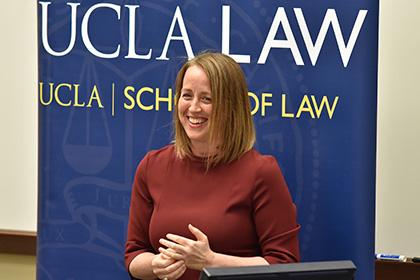
When UCLA School of Law’s A. Barry Cappello Trial Team started to prepare for its latest competition this semester, they considered the difficult issue at the core of the case, having to do with Miranda rights, and immediately knew whom they should consult.
"The case turns on whether a criminal defendant's confession is admissible," says Justin Bernstein, who coaches the trial team. "The students had been doing the research, and our discussion had been fruitful. But it has been 17 years since I took Criminal Procedure. So, I thought: Why not get help from an expert?"
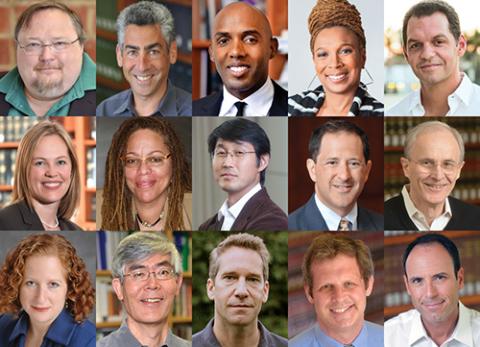
Sixteen members of the UCLA School of Law faculty have been recognized as leaders of legal scholarship based on the impact of their research and writing. The total is a new high for UCLA Law.
-
J.D. Business Law & Policy
-
J.D. Critical Race Studies
-
J.D. David J. Epstein Program in Public Interest Law & Policy
-
J.D. Law and Philosophy
This article was originally published on the UCLA Blueprint website on February 10, 2022, and will appear in the Spring 2022 print edition of Blueprint magazine. We share it here with Blueprint's permission.
Critical Race Theory and UCLA
by Jim Newton
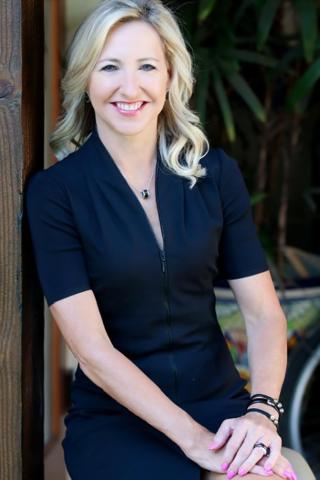
UCLA School of Law alumna Alicia Miñana de Lovelace ’87 has been named chair-elect of the UCLA Foundation Board of Directors, which oversees $5.1 billion in total assets. She succeeds Craig Ehrlich on July 1.
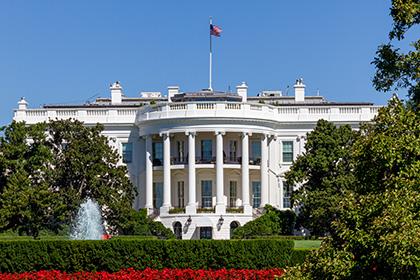
During an invitation-only event on Jan. 28, U.S. Attorney General Merrick Garland and White House staff members applauded UCLA School of Law and other law schools nationwide for their work in addressing the country’s housing and eviction crisis.

Fourteen law school deans from across the country have collaborated on a book called Beyond Imagination? The January 6 Insurrection (West, 2022), which examines that event “from a legal perspective, in hopes of moving the nation forward towards healing and a recommitment to the rule of law and the Constitution.” UCLA School of Law Dean Jennifer L.

Long before he gave back to UCLA School of Law in a historic act of generosity that led to the naming of the David J. Epstein Program in Public Interest Law and Policy in his honor, Epstein stood out among the law school’s stellar alumni base for his excellence in service, practice, philanthropy, and engagement.
-
J.D. David J. Epstein Program in Public Interest Law & Policy
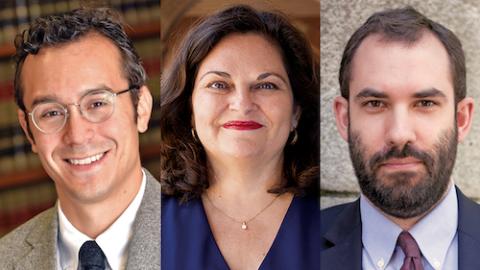
UCLA School of Law faculty members Laura E. Gómez, Blake Emerson, and Aaron Littman have earned prestigious section awards that are presented during the annual meeting of the Association of American Law Schools.
The honorees join UCLA Law Distinguished Professor Kimberlé Crenshaw, who was recognized with the Triennial Award for Lifetime Service to Legal Education and to the Law.
It was mid-March 2020 and Brad Sears had a good indication of what was going to happen next. He had survived the AIDS epidemic four decades ago and based on that experience knew COVID-19 would quickly expose existing social inequalities.
UCLA School of Law Professor Edward Parson has published an editorial in Science, the world’s leading scientific journal, calling for more research on solar geoengineering.
Solar geoengineering is a potential way to complement deep emissions cuts and adaptation measures in an integrated response to climate change. It would help make the Earth a little more reflective to incoming sunlight, most likely by spraying a fine mist of reflective aerosols in the upper atmosphere.