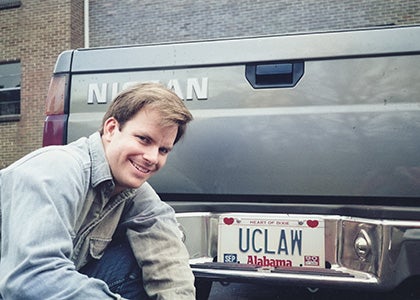
 01. ALUMS WHO SHOW THEIR PRIDE
“I believe this photo shows that UCLA alums are establishing beachheads everywhere in the U.S.”
Greg Smith ’89 proudly displays his personalized Alabama license plate.
How the LL.M. and M.L.S. programs meet the needs of a global society and help UCLA shape the future of legal education
“The country needs people in leadership roles who understand how the law works, and not all of them need to have a three-year J.D. and a license to represent clients.”
Transforming legal education

Offering expansive opportunities for students from all backgrounds, UCLA Law has been moving legal education forward since the day it opened in 1949. Little more than 20 years later, the law school launched its robust clinical education program. And more recent decades have seen a shift further toward the future, with an emphasis on degrees and specializations that expand the reach of a UCLA Law education and diploma.
Today, professionals like Ip who want to learn the law and earn a UCLA Law degree without ultimately practicing law can join the M.L.S. program. At the same time, hundreds of lawyers come from around the world to pursue master of law (LL.M.) degrees, educating themselves in American law or specializing in an array of key areas of practice. These cohorts now make up a vital portion of the students who attend UCLA Law each year— and of the alumni who are able to impact their communities in transformative ways.
Russell Korobkin, the Richard C. Maxwell Distinguished Professor of Law and vice dean for graduate and professional education, was one of the visionary administrators behind this remarkable development. Expanding the menu of what a law school offers was at the top of his mind when he conceived of and launched the M.L.S. program in 2019.
“In the United States, law has traditionally been offered only as a graduate degree, which means that very few people in the business, nonprofit, and government sectors of the economy who are not credentialed lawyers have had any opportunity to study law,” he said. “In a world in which law affects virtually every corner of the economy, this is a really bad situation. The country needs people in leadership roles who understand how the law works, and not all of them need to have a three-year J.D. and a license to represent clients.”
People who earn LL.M. degrees also enjoy the opportunity to distinguish themselves in their careers. The program has been around for years, but it has grown rapidly in size and stature over the past two decades. It is designed for practicing lawyers who have already earned their law degrees, many of whom come from outside the United States to gain expertise in specialties that aren’t readily available in other countries.
“In a lot of countries, law schools provide legal training for private law practice,” said Lara Stemple, assistant dean for graduate studies and international student programs. “Depending on the country, there isn’t the norm that we have at UCLA Law of studying all areas of law and providing students the ability to do work in a huge range of areas. We’re seeding the field with young people who are well trained in topics of law that they wouldn’t otherwise be able to study.”
Broadening perspectives
Before he earned his LL.M. degree at UCLA Law, Juan Pablo Escudero LL.M. ’22 was an environmental attorney who advised former Chilean president Sebastián Piñera on climate change. After graduation, Escudero returned home, and he now teaches college courses in climate change law. He also works remotely for UCLA Law’s Emmett Institute on Climate Change and the Environment, researching how to craft better methane regulations for South American countries.
“UCLA taught me that there’s no one way of being a lawyer,” he said. “You can be focused on climate change, or you can do contracts and work for a mining company. It was a fascinating realization for me. I don’t think that there’s any place on Earth that understands environmental law, environmental advocacy, and environmental fighting better than UCLA, or better than California. The people who work there, it’s like playing in the most competitive sports league. This is where the big dogs are.”

Students in the M.L.S. program look at UCLA Law in the same way, and they view their degree as a key opportunity for career advancement.
Fifteen years ago, there weren’t even five M.L.S. programs nationally, said Jason Fiske, assistant dean of graduate studies and professional programs at UCLA Law. Today, there are 110 M.L.S. programs in the United States, and the number is expected to swell to 200 within five years.
UCLA Law faculty members began considering the idea when they understood that an increasing number of careers require at least a basic understanding of the law. But for the longest time, the only option was a J.D. degree. “The faculty knew that the law is too important to leave to just lawyers,” Fiske said. “The law impacts everybody. This provides access to legal education to people who don’t want to or don’t need to become lawyers.”
The school created an M.L.S. program with nine specializations. The most popular are in entertainment and media law, business law, and employment law. Now, M.L.S. graduates include entertainment executives who frequently negotiate contracts and licensing agreements, journalists who write news stories about complex legal matters, and executives who work in health care compliance.
This year, 130 students are enrolled in the M.L.S. program. The average member is 40 years old and already established in a career. Students have the option to take courses online or in person, and in a full- or part-time capacity. They are challenged by a rigorous curriculum that eschews classic law school courtroom preparation. “We just focus on the law aspects of the various topic areas,” Fiske said. “But nothing is taught lighter than it is in the J.D. program.”
“I don’t think that there’s any place on Earth that understands environmental law, environmental advocacy, and environmental fighting better than UCLA, or better than California.”
The LL.M. program similarly sees a set of students from a wide array of backgrounds. The program enrolls roughly 220 students per year, up from about 20 two decades ago, hailing from roughly 35 countries. LL.M. students specialize in popular tracks like business law and media, entertainment, technology, and sports law.
Importantly, the program also offers the Health and Human Rights Fellowship, allowing students from South Africa and other nations to come to UCLA to study global health, human rights, gender-based violence, and HIV-AIDS through a legal lens. Similarly, the Critical Race Studies Fellowship attracts students from countries such as Colombia and Brazil, giving them an understanding of racial justice and the tools to foster change in their home countries.
Many LL.M. graduates apply their new abilities in government, nonprofits, academia, and NGOs abroad, where they demonstrate a particular hallmark of a UCLA Law education: writing in the American legal style and using clear, uncomplicated, and consistent verbiage.
For foreign lawyers who may spend five or more years in private practice before pursuing an LL.M. degree, their time at UCLA Law is “seen as a very pivotal year,” Stemple said. “It helps to show that you’re a global practitioner, that you can spend a year in an English-speaking environment. And then when you return, you have a higher status within a law firm. That’s kind of baked into the law firm trajectory in those countries.”
A life-changing opportunity
As UCLA Law marks its 75th anniversary, it enjoys the ongoing involvement of more than 20,000 living alumni, a considerable number of whom now hold LL.M. and M.L.S. degrees. Like the generations of J.D. students who have come through the law school, these professionals and attorneys know well the value that a UCLA Law degree carries, in every kind of career and all over the world.
“In Latin America, UCLA is a name that doesn’t require any explanation,” Escudero said. “People know right away the brand you’re talking about.”
For his part, Ip recalls his time at UCLA Law as a significant turning point in his career, a moment when he was surrounded by “a lot of folks who had lots of lived experiences to share in the classroom.” More still, it was an experience that he will forever credit as a big part of his success.
“I started the program and immediately found immense value,” he marveled. “It has changed my life trajectory.”
Read more in the 75th Anniversary edition of the UCLA Law magazine.
Celebrating 75 Years of UCLA Law
Join the dean of UCLA School of Law, Michael Waterstone, UCLA Chancellor Julio Frenk, and distinguished faculty, students, and alumni as we celebrate 75 years of UCLA Law. This video tribute honors our history of legal innovation and vision for shaping tomorrow's legal landscape. From groundbreaking scholarship to producing leaders who have transformed the practice of law, UCLA Law continues its tradition of excellence while looking boldly toward the future.
-
LL.M. Program
-
Master of Legal Studies
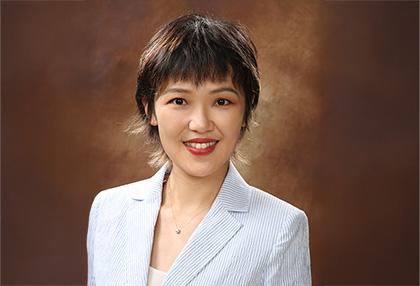
Yutian An, whose research lies at the intersection of criminal law, administrative law, and comparative law, is joining the UCLA School of Law faculty as an assistant professor.
She will come to UCLA Law in January 2026 from Harvard Law School, where she has been a Climenko Fellow and lecturer. She will defend her Ph.D. dissertation in politics at Princeton University in December.
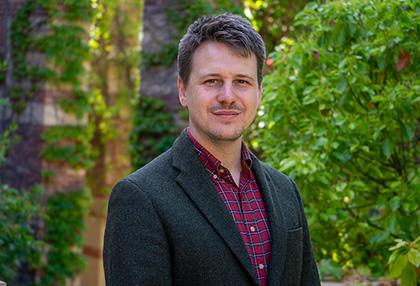
Brian Highsmith, whose research focuses on the design of local- and state-level democratic institutions in the United States, has joined the UCLA School of Law faculty as an assistant professor.
UCLA Law is grateful to funders who support our institutes, centers, and programs.
A. Barry Cappello Program in Trial Advocacy
Named for alumnus A. Barry Cappello ’65 in recognition of his generous 2017 gift, this program enhances trial advocacy training and provides scholarships for aspiring trial lawyers.
Celebrating 75 Years of UCLA Law
Join the dean of UCLA School of Law, Michael Waterstone, UCLA Chancellor Julio Frenk, and distinguished faculty, students, and alumni as we celebrate 75 years of UCLA Law. This video tribute honors our history of legal innovation and vision for shaping tomorrow's legal landscape. From groundbreaking scholarship to producing leaders who have transformed the practice of law, UCLA Law continues its tradition of excellence while looking boldly toward the future.
Launched over 50 years ago, UCLA Law’s clinical program— widely credited as the first of its kind— lets students put their lawyering skills to work on behalf of real clients.
“Our wide array of clinics provides students diverse opportunities to learn while effecting real change,” said Nina Rabin, director of the program. “As innovators in this area, we have created clinics that give students exposure to a broad range of substantive areas and advocacy methods, all of which are making a difference in people’s lives locally and globally.”
“This class is everything that law school should be. It embodies the ideal that the best way to learn is to do.”
Supreme Court Clinic
All law students study U.S. Supreme Court cases, but those in UCLA Law’s Supreme Court Clinic actually help represent clients. Just this year, their efforts led to a unanimous victory in Thompson v. United States, in which the Court held that a defendant cannot be convicted under a statute prohibiting false statements if his statements were merely misleading but not false. The students also persuaded the Court to hear an appeal in Villarreal v. Texas, which Professor Stuart Banner will argue in the fall. The issue in Villarreal is whether the Sixth Amendment right to counsel guarantees defendants the ability to discuss their testimony with counsel during overnight recesses. For these cases and many others since 2011, students have researched and written briefs. “It’s the kind of experience that few lawyers encounter, and I learned so much from the process,” said clinic student Albert Tian ’25.
Prisoners’ Rights Clinic
Arguing before the U.S. Court of Appeals for the Ninth Circuit, students in the Prisoners’ Rights Clinic helped advance civil rights claims brought by a client who was blinded in one eye after cataract surgery and another who was severely beaten by other prisoners after officers failed to protect him. “Students come to understand that prisoner plaintiffs deserve first-rate lawyering, and that with very hard work, they are capable of providing it,” said Professor Aaron Littman, clinic founder and faculty director. Indeed, they are: The clinic secured victories in all five of its cases decided in 2024. After writing briefs for two of those cases as a student, Joe Gaylin ’24 — now a federal district court clerk— said, “This class is everything that law school should be. It embodies the ideal that the best way to learn is to do.”
“The opportunity to now use my education to help advance policies that protect the rights of immigrant communities like mine is a full-circle experience.”
Immigrant Family Legal Clinic and Immigrants’ Rights Policy Clinic
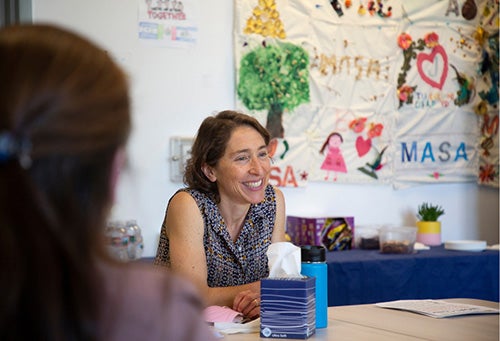
Winning an asylum claim for a young adult with severe mental illness was a particularly sweet victory for the law students at the Immigrant Family Legal Clinic, which serves the students and families at the RFK Community Schools in Koreatown. Previous clinic students had obtained humanitarian visas for the client’s mother, who was a victim of human trafficking, and four younger siblings. This is just one of the many success stories from the country’s only immigration law clinic that’s located on a K-12 public school campus. Clinic students help families at the school obtain residency, earn visas, gain work authorization, and more. “I would recommend the clinic to anyone interested in learning about immigration law and making a difference in students’ and their families’ lives,” said Lauren Kiesel ’20.
Students in the Immigrants’ Rights Policy Clinic lead research and advocacy to support immigrant communities in California. The work is especially meaningful to Soraya Morales Nuñez ’26, a former DACA beneficiary whose clinic efforts are focused on preserving state sanctuary laws. “The opportunity to now use my education to help advance policies that protect the rights of immigrant communities like mine is a full-circle experience,” Morales Nuñez said.
Community Lawyering in Education Clinic
Students in the Community Lawyering in Education Clinic are working to address inequities in the child welfare reporting system through projects that challenge the use of predictive algorithms and the targeting of low-income people of color.
“Clinical education is really valuable because it gives students a chance to figure out their own solution to problems.”
Human Rights Litigation Clinic
“Clinical education is really valuable because it gives students a chance to figure out their own solution to problems,” said Cathy Sweetser, director of the Human Rights Litigation Clinic. The approach is working. Clinic students brought a class action lawsuit challenging the use of force by private contractors against immigration detainees. A hearing is currently pending in federal court.
Veterans Legal Clinic
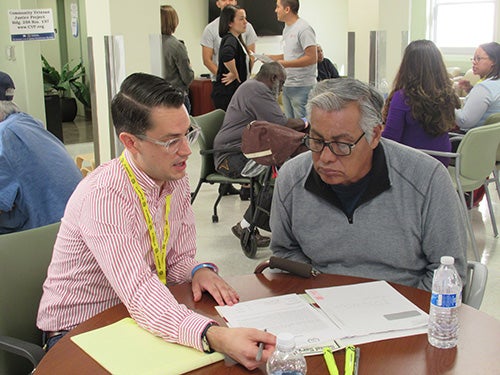
Appealing benefits claims, resolving landlord-tenant disputes, and clearing criminal records are just some of the ways Veterans Legal Clinic students have supported veterans. “Working on behalf of clients who truly needed dedicated representation helped me bridge the gap between legal theory and real-world advocacy and was the most meaningful part of my time at UCLA Law,” said Army veteran Gabriel Henriquez ’25.
Patent Clinic

When Beeline Wheelchairs needed a patent for the design of their invention of a low-cost, customizable wheelchair constructed from old stop-sign posts, the Patent Clinic took them on as a client. The result, “System for Construction of an Adjustable Wheelchair and Method of Using the Same” (U.S. Patent No. 9,974,703), is just one of the 26 issued patents that students have obtained for nonprofit pro bono clients. Students screen and select clients and draft and file their applications. “We receive hundreds of emails requesting representation and select clients who are traditionally excluded from access,” said Eugene Chong, director of the clinic.
“Working on behalf of clients who truly needed dedicated representation helped me bridge the gap between legal theory and real-world advocacy and was the most meaningful part of my time at UCLA Law.”
Street Law Clinic
“Street Law Clinic has been my favorite class I have taken in law school,” said aid Alondra Ulloa ’25 of her experience teaching legal topics to Los Angeles high school students— many of whom may have had negative experiences with the law. “[Having] my students ask critical questions, challenge ideas, and even express interest in pursuing legal careers was incredibly rewarding for them and educational and empowering for me. It reminded me why I chose this path in the first place: to make the law more accessible, and to help others see it as a tool for empowerment rather than just a source of harm.”
Mediation Clinic
Nica Aranaga ’25 calls working in the Mediation Clinic the most rewarding part of her legal education. She and her fellow student mediators help couples navigating the divorce process divide property, decide on parenting plans, and discuss spousal and child support obligations. But the clinic benefits go beyond the legal skills learned. “It has taught me how to listen carefully, respond intentionally, and help clients reach meaningful resolutions, even in highly charged situations,” Aranaga said. “I never expected to develop this kind of interpersonal skill in law school, and I know it will serve me throughout my legal career.”
Talent and Brand Partnerships / Name, Image and Likeness Clinic
Helping score deals is more than a game at the new Talent and Brand Partnerships / Name, Image and Likeness Clinic, where law students advise UCLA student-athletes on licensing, merchandising, branding, and endorsement matters during team presentations and one-on-one clinic sessions. This win-win collaboration between the law school’s Ziffren Institute and UCLA Athletics helped UCLA earn a 2024 NIL Awards nomination for Best Institutional NIL Program.
Read more in the 75th Anniversary edition of the UCLA Law magazine.
Celebrating 75 Years of UCLA Law
Join the dean of UCLA School of Law, Michael Waterstone, UCLA Chancellor Julio Frenk, and distinguished faculty, students, and alumni as we celebrate 75 years of UCLA Law. This video tribute honors our history of legal innovation and vision for shaping tomorrow's legal landscape. From groundbreaking scholarship to producing leaders who have transformed the practice of law, UCLA Law continues its tradition of excellence while looking boldly toward the future.
It’s well known that reducing methane emissions is an effective near-term climate change mitigation tool. And the quickly evolving use of satellite technology is transforming our ability to manage and control those emissions. However, many policymakers don’t yet have a good understanding of how satellites work, what data comes from them, or what the opportunities and limits of those data are.
-
J.D Environmental Law