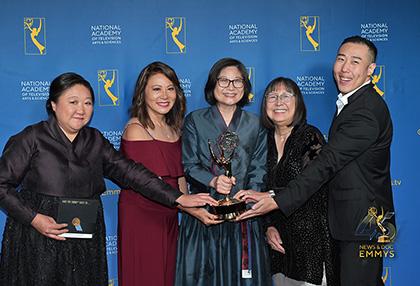
When the winners of the 45th News and Documentary Emmy Awards were announced on September 26, the filmmakers behind one triumphant production were quick to credit a number of UCLA School of Law students and faculty members who helped make it all happen.

Alexandra Kolsky ’22 is now an associate at Venable, and she also worked on Free Chol Soo Lee as a student in the clinic. “It was one of the highlights of my time at UCLA Law,” she says. “The clinic not only gave me a strong foundational education in media and intellectual property law but also taught me how to use that education to help real clients solve real problems. I often reflect on the invaluable lessons I learned from my teammates and my wonderful professors in the clinic as a practicing IP attorney now.”
This year, clinic participants had special reason to keep tabs on the Emmy proceedings because, aside from Free Chol Soo Lee, two other films on which they had worked were nominated. Love in the Time of Fentanyl, about people who took an innovative approach to managing overdoses in Vancouver, Canada, had also played on Independent Lens on PBS. It was nominated in the Outstanding Current Affairs Documentary category. And Anonymous Sister achieved many accolades for its personal portrayal of the opioid crisis even before it was named as an Outstanding Social Issue Documentary nominee.
While neither of those movies won, the filmmakers who worked on them were very satisfied with the attention that the nominations afforded them – and with the work of the clinic students who helped bring the projects to fruition.
“It’s extremely gratifying to provide our students with the opportunity to work directly with these creative and inspiring filmmakers,” Cohen says. “Over the course of one or two semesters, we get to watch the clinicians grow from bright and aspiring lawyers into confident practitioners who are making a real difference.”
Stream Free Chol Soo Lee for free through Nov. 14.
- Jonathan Anschell, Chief Legal Officer, Lecturer in Law at UCLA (teaches Law 481: Harmonizing Hollywood: Entertainment Disputes, Ethics and Peacemaking)
- Alexa Camara, UCLA Law Class of 2014
- Kelsey Harrison, UCLA Class of 2019
- Joyce Tseng, UCLA Law Class of 2019
- Alan Wang, UCLA Law Class of 1998
SUBMIT YOUR APPLICATION HERE
Please submit your application by 11:59 PM on Friday, October 11th. Due to limited space, the Ziffren Institute will randomly select 30 students. Applicants will be notified of their admission status by email on Monday, October 14th.
Thank You for Joining Us
Thank you to all who attended the 2025 Digital Media & Video Game Conference. We are deeply grateful to our speakers, sponsors, and attendees for contributing to another successful program.

Program
-
Schedule
Room 1347, UCLA School of Law
8:30 to 9:00 AM (PT)
Registration / Light Refreshments
9:00 to 9:15 AM (PT)
Introductory Remarks
9:15 to 10:30 AM (PT)
Annual Litigation Update
(1.25 General CLE)Our annual litigation update will examine some of the top cases and disputes from the prior year or so affecting the digital media and video game space – including, among others, those involving rights of publicity, rights of privacy, first amendment, trademarks and copyright.
Moderator:
- Maria Abesa, Senior Counsel, Square Enix
Panelists:
- William (Bill) Coats, Sole Practitioner
- Marc Mayer, Partner, Mitchell Silberberg & Knupp LLP
- Nima H. Mohebbi, Partner, Sidley Austin LLP
10:35 to 11:50 AM (PT)
Hot Topics in Online Safety and Privacy: What’s Happened in 2025 and What’s Ahead in 2026?
(1.25 General CLE)This panel will provide insight into the general themes impacting privacy and online safety in the United States under the current administration, legislative trends at all levels in the U.S. and in Europe, and related enforcement actions. Key topics include online safety, censorship, content moderation, and the treatment and online protection of children, including trends in age gating, targeted advertising rules, as well as discussion of a potential new Children’s Online Privacy Protection Act (states and Federal), AI and privacy, and applicable European Union laws.
Moderator:
- Felix Hilgert, Partner, Osborne Clarke
Panelists:
- Christina Gunzenhauser, Senior Corporate Counsel, Riot Games
- Katie Ratte, Chief Privacy Officer, The Walt Disney Company
- Susan Rohol, Partner, Willkie Farr & Gallagher LLP
- Elvis Stumbergs, Senior Counsel, Privacy & Cybersecurity, Electronic Arts
- Hailun Ying, Head of Privacy, Legal, Roblox
11:50 AM to 12:30 PM (PT)
Lunch & Networking Break
12:35 PM to 1:10 PM (PT)
Lunch Presentation – Hollywood’s Blind Spots: Film/TV vs. Attention Economy
(0.5 General CLE)If only studios and streamers had only their rivals to worry about. But film and TV must also contend with a much broader array of media-consumption options vying for audience time. This presentation will focus on the increasing competition from first and foremost the world of videogames, which we'll zoom in on for the deepest exploration, alongside a far-ranging survey of audience alternatives including music, social video and AI-generated content.
Speakers:
- Andrew Wallenstein, Chief Media Analyst, Luminate Intelligence
- Kaare Eriksen, Media Analyst, Luminate Intelligence
1:15 to 2:30 PM (PT)
Alternative Business Models in Games and Digital Media
(1.25 General CLE)As digital media and gaming evolve, so do the ways companies generate revenue, distribute content, and structure partnerships. This panel explores emerging business models—from global payment systems and IP ownership frameworks to platform shifts, subscriptions, and decentralized ecosystems—while addressing the legal and regulatory challenges that come with them.
Moderator:
- Cooper Jackson, Senior Vice President, Business Affairs & Development, Electronic Arts
Panelists:
- Andy Babb, Chief Executive Officer, Pixel Blaze Studio
- Carla Bedrosian, Chief Legal Officer, Xsolla
- Chris Carvalho, Director, Roblox
- Gary Rosenfeld, Chief Executive Officer, Plan A Games
- Dorian Slater Thomas, Counsel, Frankfurt Kurnit Klein & Selz
2:35 to 3:50 PM (PT)
Ethical Uses of AI in the Workplace, Including as a Tool for Attorneys
(1.25 Legal Ethics CLE)As law firms and in-house legal departments are increasing incorporating AI into their practices, it is important to understand the ethical and practical issues and limitations. Our panel will discuss how to use AI as part of a legal practice in a safe, ethical and compliant manner, including a look at some of the AI programs developed specifically for legal practices.
Moderator:
- Rusty Weiss, Partner, Sidley Austin LLP
Panelists:
- Campbell Austin, Director and Associate General Counsel, Amazon Games
- Elina Avakian, Associate General Counsel, Snap Inc.
- Michael Madison, Law Professor, University of Pittsburgh
- Nabil Virji, Strategic Business Development Lead, Harvey
3:50 to 4:15 PM (PT)
Networking Break
4:15 to 5:30 PM (PT)
General Counsel Roundtable
(1.25 General CLE)The best GCs are those who are conversant on cutting edge legal and business issues. Join our speakers from leading technology and video game companies to hear about business and legal trends, what keeps them up at night, and a general discussion as to the state of the digital media and video game spaces.
Moderator:
- Seth J. Steinberg, Principal, Digital Arts Law
Panelists:
- Ira Lam, Head of Legal, Netflix Games
- Stan McCoy, Senior Vice President and General Counsel, Entertainment Software Association
- Roy Rosenthal, Chief Legal Officer & Corporate Secretary, Scopely
- Clint Smith, Chief Legal Officer, Discord
5:30 to 5:35 PM (PT)
Closing Remarks
5:35 to 6:45 PM (PT)
Reception (Sponsored by Osborne Clark)
CA MCLE Credits: UCLA School of Law is a State Bar of California approved MCLE provider. This event is approved for 6.75 hours of MCLE credit. (5.5 hours of general credit and 1.25 hours of legal ethics credit).
-
RECEPTION
Join us for a networking reception immediately following the day’s program. The reception will provide an opportunity to connect with speakers, colleagues, and fellow attendees in a relaxed setting over light refreshments and beverages.
The reception will be held outdoors in Shapiro Courtyard, located at UCLA School of Law.
This reception is generously sponsored by Osborne Clarke.

Guest Information
-
CHECK IN & BADGE PICK UP
Badges are required for entry and may be picked up at the check-in tables near the entrance of Law Room 1347, located on the first floor of the UCLA School of Law.
Check-in begins at 8:30 AM, and the program will begin promptly at 9:00 AM. Refreshments and beverages will be available during check-in.
-
PARKING
-
Law School Parking Lot (On Charles E. Young Dr. East) | Map
-
$30/day | 3-minute walk to the Law School building.
-
Visitor permits can be purchased via ParkMobile or at the Self-Service Pay Station.
-
-
Parking Structure 3 (North) | Map
-
$16/day | 8-minute walk to the Law School building.
-
Please park in designated guest parking areas. Visitor permits can be purchased at the Self-Service Pay Station within these areas.
-
Address: 215 Charles E. Young Drive North, Los Angeles, CA 90095
-
-
Minimum Continuing Legal Education Credit (MCLE)
-
MCLE Reading Materials
A combined PDF of all the reading materials can be downloaded here.
-
Digital Brochure & Speaker Biographies
View the digital brochure here.
-
FREQUENTLY ASKED QUESTIONS
- How many hours of MCLE credit can I earn?
- 5.5 hours of general credit and 1.25 hours of legal ethics credit if you attend all sessions.
- 5.5 hours of general credit and 1.25 hours of legal ethics credit if you attend all sessions.
- When will I receive my MCLE certificate?
- Certificates will be emailed a few weeks after we verify your attendance and code word submissions. Please ensure your email address is correct on the form.
- Certificates will be emailed a few weeks after we verify your attendance and code word submissions. Please ensure your email address is correct on the form.
- What if I forgot to scan the QR code during the conference and didn’t complete the MCLE attendance form?
- A follow-up email will be sent to all in-person attendees after the event with a link to the MCLE Attendance Form.
- A follow-up email will be sent to all in-person attendees after the event with a link to the MCLE Attendance Form.
- Where can I find the MCLE reading materials?
- A combined PDF of all the reading materials can be downloaded here.
UCLA School of Law is a State Bar of California approved MCLE provider. This event is approved for 6.75 hours of MCLE credit.
- How many hours of MCLE credit can I earn?
Sponsors & Promotional Partners
-
SPONSORS
Thank You to Our 2025 Sponsors

-
PROMOTIONAL PARTNERS
Thank You to Our 2025 Promotional Partner

Digital Media & Video Games Conference Committee
-
Co-Chair, Seth J. Steinberg
Seth J. Steinberg, Principal, Digital Arts Law
Mr. Steinberg, principal of Digital Arts Law, is an accomplished commercial transaction and intellectual property attorney with a wide range of experience in several practice areas. His private practice provides strategic advice and counsel to both mature and emerging companies located domestically and abroad, including those with business interests in online and new media, content creation and distribution - such as interactive and filmed entertainment - ecommerce, virtual reality, music, technology and consumer products.
Prior to forming his private practice, Mr. Steinberg was general counsel and director (head) of business affairs for San Francisco based LucasArts, a Lucasfilm company. He was a member of LucasArts’ senior executive group and advised management on a wide range of business, corporate and legal issues for more than seven years.
At LucasArts, Mr. Steinberg oversaw all negotiation and documentation of the company’s worldwide strategic business arrangements and alliances in development, distribution, sales, manufacturing and marketing. He also managed the licensing of cutting-edge technology, content acquisition and aspects of LucasArts’ copyright, trademark and patent portfolios. He was also responsible for all litigation-related activities, including risk management, legal analysis and management of outside counsel on a worldwide basis.
Prior to joining LucasArts, Mr. Steinberg was legal counsel, business and legal affairs, for 989 Sports / 989 Studios, a division of Sony Computer Entertainment America Inc. At 989, he was responsible for business and legal functions in connection with the production, distribution, and marketing of the company’s interactive entertainment software titles, including sports games licensed by the four major professional sports leagues, their respective players associations, and the NCAA. In addition, Mr. Steinberg handled matters related to business development and licensing out the company’s intellectual property.
Prior to 989 Sports / 989 Studios, Mr. Steinberg was an associate at Reinis & Reinis, a business law firm in Los Angeles that focused on representation of companies in the apparel and fashion industries. While there, he handled a variety of transactional and litigation matters.
Mr. Steinberg is admitted to practice in California, Illinois and the District of Columbia and was previously selected by his peers as a Northern California “Super Lawyer” (by Law & Politics).
-
Co-Chair, Rusty Weiss
Rusty Weiss, Partner, Sidley Austin LLP
Rusty Weiss is a partner in the Century City office of Sidley Austin LLP and a member of Technology Transactions Practice and Sports, Media and Entertainment Group. Mr. Weiss specializes in transactional matters and counseling in the fields of media, entertainment, sports, music, technology and intellectual property with a particular focus on the convergence of entertainment and technology. Mr. Weiss represents video game, motion picture, television and streaming, mobile, Internet, sports, music, toy and multimedia companies in structuring, negotiating and drafting a broad range of agreements involving the financing, acquisition, development, production, marketing, promotion, distribution, publishing, sale and other exploitation of video games, motion pictures, television and Internet programming, podcasts, music and consumer products. Mr. Weiss also represents a wide array of technology companies in structuring, negotiating and drafting agreements involving the research, development, licensing, manufacturing, marketing, distribution, sale and other exploitation of technology. In addition to the transaction matters that he handles for clients, Mr. Weiss regularly counsels clients on intellectual property and commercial law matters, including, without limitation: artificial intelligence, advertising, fair use, right of publicity, the Digital Millennium Copyright Act, piracy, contests, sweepstakes and gaming, digital rights management, and unfair competition.
Mr. Weiss has spoken on many panels concerning issues faced by the media, entertainment, technology and intellectual property industries and has been widely quoted in Variety, The Hollywood Reporter, USA Today, Los Angeles Times, CNET News, San Jose Mercury News and other publications.
Frequently recognized in various legal publications for his achievements, Rusty was named by Variety in its Legal Impact Report (2017–2018, 2020–2023) and also by Variety in its Dealmakers Impact Report (2019, 2021-2023). He is recommend by The Best Lawyers in America for Entertainment Law and Technology Law (2010–2022), Euromoney’s Expert Guides (2015–2021), and The Legal 500 US (2014, 2016–2017). In 2014, the Los Angeles Business Journal named Rusty one of their “Most Influential Lawyers in Digital Media and Ecommerce Law.”
-
Planning Committee, Maria Abesa
Maria Abesa, Senior Counsel, Business & Legal Affairs, Square Enix
Maria Abesa supports development, marketing, and publishing functions and works with the Square Enix legal teams in Los Angeles, London, and Tokyo to ensure consistent compliance with applicable law. Additionally, she assists in the finance, investment and corporate governance matters of the Square Enix group of companies. Prior to working at Square Enix, Maria was an associate in the Mergers and Acquisitions group of Sidley Austin in Century City.
Maria is a triple Bruin, having obtained a BA in Political Science before proceeding to graduate from the UCLA School of Law with a JD and the Luskin School of Public Affairs with an MPP. Maria spends her spare time cycling the bike trails of Los Angeles, building mechanical keyboards, lamenting the state of the Denver Broncos, and (of course) playing video games.
-
Planning Committee, Cooper Jackson
Cooper Jackson, Senior Vice President, Business Affairs & Development, Electronic Arts
Cooper Jackson is Senior Vice President of Business Affairs and Development at Electronic Arts, which she joined in 2019. She leads the teams responsible for EA's long-term commercial and strategic partnerships. She is responsible for managing EA’s relationships with global platform partners for the distribution and marketing of games on console, PC and mobile devices, cloud streaming and subscription services. She also oversees negotiations of IP licenses integrating entertainment content and brands into EA's games, as well as film and TV production deals for EA’s IP. In addition, Cooper heads business development for technology licensing, music licensing and talent engagement, including union negotiations.
Prior to EA, Cooper was Senior Vice President at Twentieth Century Fox Film, where she managed worldwide Business Affairs for digital home media, leading negotiations of complex commercial deals and driving strategic initiatives to distribute film and TV content on digital streaming and transactional platforms. Before joining Fox, Cooper was Senior Vice President of Business Affairs for Sony Pictures Home Entertainment, responsible for digital and traditional media licenses, content acquisitions and global distribution partnerships. Earlier in her career, Cooper was an antitrust and intellectual property litigator at major law firms in New York and Los Angeles and Vice President of Legal Affairs at Warner Bros.
Cooper is a graduate of Georgetown University Law Center and Williams College, where she was on the Board of Trustees. She has also served on the California Advisory Board of The Trust for Public Land and as an Executive Member of Women in Film. She lives in Los Angeles with her husband, a screenwriter, and has three grown sons.
-
Student Conference Coordinator, Britney Pirring
Britney Pirring, UCLA School of Law Student
Britney Pirring is a second-year law student and Achievement Fellow at UCLA School of Law, specializing in Media, Entertainment, Technology, and Sports Law. She serves as Co-Chair of the First Generation Law Students Association, a Staff Editor for the UCLA Law Review, and a Submissions Editor for the Entertainment Law Review.
She earned her bachelor’s degree from UC Berkeley, double-majoring in Political Science and Media Studies, and graduated magna cum laude and as a member of Phi Beta Kappa.
During her 1L summer, Britney worked at Johnson Shapiro Slewett & Kole, a boutique entertainment firm representing top talent across film and television. There, she developed a strong understanding of Hollywood’s representation landscape through reviewing publicity releases, conducting Hollywood guild research, and analyzing intellectual property ownership and clearance issues.
She will join Kirkland & Ellis as a 2L Summer Associate in the Century City office’s corporate practice group and is also excited to extern at Riot Games this coming spring. As an avid gamer, Britney is passionate about the intersection of law, video games, and emerging technologies, with a particular interest in data privacy and compliance issues affecting video game companies. She looks forward to developing her legal expertise in the interactive entertainment space.
Presented by The
Ziffren Institute for Media, Entertainment, Technology & Sports Law and Institute for Technology, Law & Policy in association with the American Bar Association’s (ABA) Forum on Sports and Entertainment Industries, this year’s conference again features leading practitioners and executives who will discuss some of the most pressing issues impacting the digital media and video game spaces.
In addition to robust discussion of a variety of topics that will engage and educate, this one-day conference also includes opportunities to meet, network and re-connect with colleagues and friends. The conference is held in an intimate setting with limited availability and includes a hosted lunch and evening reception.
For more information please visit our website! https://law.ucla.edu/academics/centers/ziffren-institute-media-entertainment-technology-and-sports-law/digital-media-video-game-conference
Please save the date! On Wed 10/16 at 12:10PM, our ELA (Entertainment Law Association) and SLA (Sports Law Association) student groups will be hosting an LA28 panel.
Professor Steven Bank will be moderating a panel discussion featuring:
- Jessica Borowick (Senior Counsel at NBC Sports)
- Katy Freeman (Sports Lawyer [Law Offices of Howard L. Jacobs] who was also on USA Swimming’s National Team)
- Kevin Massoudi (Managing Counsel for LA 28 Olympics)
- Aaron Lowenstein (Associate General Counsel for LA28, and UCLAW alum!)
The event will unite a diverse group of lawyers involved in preparing for the LA28 Olympics and Paralympics. Students will get a chance to meet and hear from legal professionals from various sectors, including those specializing in broadcasting, athlete representation, and LA28's legal team. After the panel discussion, students will have the chance to engage with our experts and ask questions.
Lunch will be served.
RSVP here by October 2: https://forms.gle/HnUDYthVnDhLCDqL9
The Ziffren Institute invites all students to our Welcome Lunch Event! Discover our courses, programs, and resources while connecting with faculty and classmates. Lunch will be provided for those who register.
Date: Wed. September 11, 2024Time: 12:15-1:30pm Location: Law Room 1357
View Our Website for More Information: https://law.ucla.edu/academics/centers/ziffren-institute-media-entertainment-technology-and-sports-law
The Williams Institute's 2024 NYC Fall Salon will take place on Thursday, September 12 from 6:00-8:30 PM at the Meta office in Hudson Yards.
We invite you to join our discussion on the current state of LGBTQ+ law and policy and what’s at stake in the upcoming November election and beyond.For tickets to our 2024 NYC Fall Salon, please visit: https://bit.ly/NYCFallSalon24RSVP ends on September 4, 2024.
For more information, please contact Williamsdev@law.ucla.edu.

On June 21st, UCLA welcomed to campus over 500 of the entertainment industry’s most influential figures, as industry executives gathered for the 48th annual Entertainment Symposium, hosted by the
Donna Langley in the spotlight
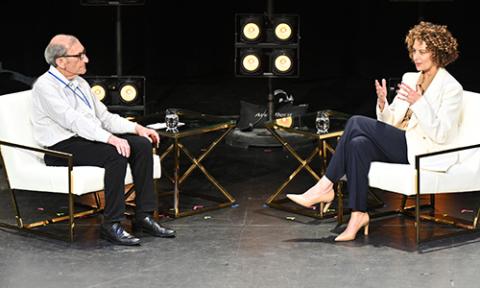
Donna Langley sat down with legendary entertainment lawyer Ken Ziffren ’65, who founded the much-heralded law firm Ziffren Brittenham as well as the Ziffren Institute. Their discussion, in the final session of the daylong conference, tied together many of the themes from the day’s panels, including how to get audiences into movie theaters, the future of streaming, the role of AI in the entertainment business, as well as Langley’s personal path to one of the top spots in the entertainment industry.
Prior to taking the helm of NBCUniversal’s films, TV and streaming content strategy last year, Langley spent two decades focused on feature films, involved in blockbusters including Oppenheimer, Jurassic World, The Super Mario Bros Movie, 50 Shades of Grey and Get Out.
Ziffren asked Langley how she decides what content to assign to traditional broadcast TV (such as NBC, Bravo or E!) versus streaming on Peacock. Langley said the decision is usually straightforward, based on the clear age difference between the streaming audience and the linear TV audience. Bravo content, she explained, does well on both platforms, but with minimal audience overlap.
“We are learning as we go,” she admitted. “Something we’re thinking about strategically right now is the idea of starting with a younger audience fanbase and then migrating that over to NBC. Whether it’s possible to age down that broadcast audience remains to be seen.”
On the box office’s failure to bounce back to pre-pandemic attendance levels, Langley showed cautious optimism. She predicted an uptick in the second half of the year, driven by popular franchises and overall increase in volume.
“Consumer behavior has shifted and it’s probably not coming back anytime soon. I’m not going to say never, because it’s all cyclical,” she added.
“One of the things we’re quite optimistic about is [that] Gen Z is a very reliable audience at the box office,” Langley said. “They’re not going to see everything. It’s appointment viewing and it has to have a lot of social energy around it. That audience will just as soon go to Inside Out, Oppenheimer or Barbie or Cocaine Bear or M3GAN. It’s platform- and genre-agnostic, but has to have social energy – something they can interact with others about.”
Langley drew applause with her response about the role of artificial intelligence by saying that first and foremost, “the labor piece of it has to be right.” Although she said the company is not currently using AI to make any movies, she conceded that it’s an inevitable part of the industry’s future.
“It’s a technology just like any tech innovation that the film industry has seen throughout its 100-year history, but it’s moving so much faster.”
Langley called for “good, clever, sophisticated copyright laws around our IP, so we’re not being disadvantaged” as well as the need for freedom to creatively use the technology.
“It should be exciting, but we’ve got to get the ethics of it right,” she concluded.
‘After the Streaming Wars’
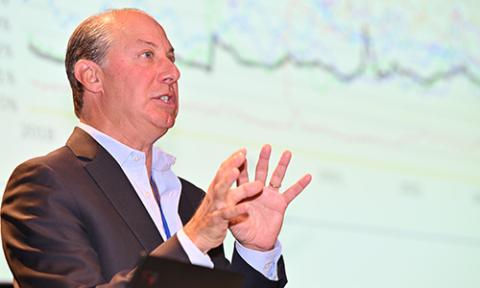
The foundation for the symposium’s conversations was laid out in the morning by Michael Nathanson, partner and senior research analyst at MoffettNathanson Research, who dissected the causes of the industry’s recent revenue loss. He pointed to rising inflation that led many consumers to tighten their spending by canceling their cable bundles and switching to streaming services. In just the past five years, 20 million U.S. homes cut the cord, he said. On the corporate side, Nathanson referenced “deflationary corporate strategies,” where companies attracted new subscribers by launching streaming services with rich content and especially low prices – Disney+, HBO Max and Peacock, for example – as well as a shift away from ad spending for TV and toward spending on ad-supported streaming and Internet services.
“As a result of this perfect storm, traditional media companies now realize that they have to adapt to this new world just as new entrants become more aggressive,” said Nathanson.
Consumers are settling into an average of four streaming products per home, according to Nathanson. But there is still a great deal of churn among customers – averaging 5% across the board, except for Netflix, which is the best at less than 2%.
Going forward, Nathanson predicts large-scale mergers and acquisitions, companies exiting the streaming business, an increase in third-party content licenses and a greater focus on sports content – which continues to be a big winner.
‘Nothing But Net – How Sports and Content Are Scoring’
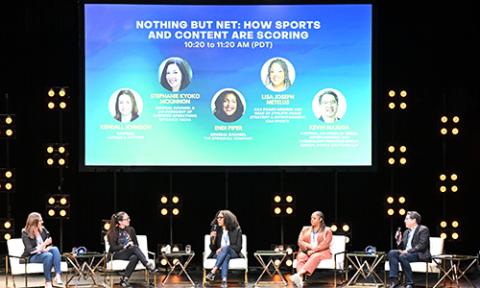
With sports in the spotlight, three experts shared perspectives on the opportunities for content creators and athletes in the session “Nothing but Net – How Sports and Content Are Scoring,” moderated by Latham & Watkins’ Kendall Johnson and Gibson Dunn & Crutcher’s Kevin Masuda, who is also a Ziffren Institute Advisory Board member.
“A lot of the leagues are thinking about how to engage viewership and fans outside of the actual season. That’s where we come in,” said Stephanie Kyoko McKinnon, general counsel at Skydance which produces Hard Knocks: Off Season and NFL Draft: The Pick is In with NFL Films.
The behind-the-scenes content featuring high-profile athletes or rising stars draws attention from sports fans while also bringing in new viewers through compelling characters and stories – which is especially important for attracting a Gen Z audience, explained Endi Piper, general counsel for The SpringHill Company which was founded by LeBron James and Maverick Carter. She went on to explain that athletes are also motivated to participate in documentaries, podcasts, and other platforms outside of their sport because it gives them an opportunity to show the world their authentic selves beyond their athletic prowess.
“They’re doing it because they want to have a voice – a lot of them don’t need the money,” Piper pointed out.
Lisa Joseph Metelus, CAA board member and head of athlete brand strategy & entertainment for CAA Sports, shared her perspective representing athletes who are interested in expanding their influence beyond the court or field. She said brands are capitalizing on the popularity of both sports and personal storytelling.
“Brands are recognizing that storytelling in general goes farther than putting a regular ad on TV,” said Metelus. “Every brand we’re speaking to right now wants to get away from traditional ads,” she says.
‘The Brands Rise Again’
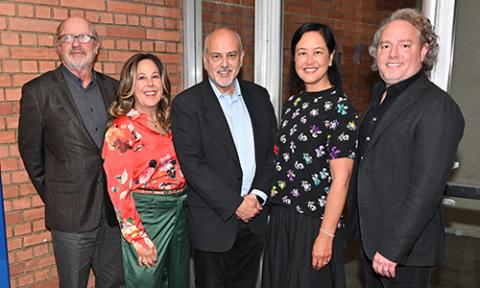
The rise of branded content epitomized by the ubiquity of Barbie was the topic of the panel “The Brands Rise Again!!” Leaders from Mattel, Sony Pictures Entertainment and Warner Bros. Pictures discussed how a brand’s fan base provides a built-in market for movies – whether that brand represent a popular toy, cartoon or famous athlete. So far this year, movies tied to existing brands have included Mean Girls, Dune 2, Kung Fu Panda 4, The Garfield Movie, and Inside Out 2.
“The audiences keep coming back,” explained moderator Michael Helfant ’83, of counsel for Loeb & Loeb LLP. “There’s an emotional connection audiences and consumers have to these brands.”
Mattel worked with 165 licensing partners on Barbie. But turning the world pink required complex agreements, reviews, approvals and timing around embargoed assets. Panelists discussed the book-length style guides that dictate how a brand can be portrayed by licensees, and the delicate dance between creators and those tasked with protecting a brand’s intellectual property.
Josh Silverman, Mattel’s chief franchise officer who worked with director Greta Gerwig on box-office-busting Barbie, says collaboration and trust between creators and brands are the alchemy for successful partnerships. It took a lot of courage for Mattel’s leadership to allow the movie’s marketing narrative to be “whether you love or hate Barbie, this movie is for you,” he said.
Panelists also discussed the pivotal role fans play for brands in generating movie buzz, and the careful balance between fandom and infringement. Eric Baum, SVP business and legal affairs at Sony Pictures Entertainment, explained that Ghostbusters’ cult following – with fans making their own costumes, proton packs and Ecto-1 vehicles – is what enabled the franchise to be reborn more than 30 years after the last film.
“You can’t then squash the enthusiasm for that kind of engagement once the new films come out,” Baum explained.
“Fans are what help drive the box office and the success of our films, so on the marketing side we lean heavily into our fans,” said Jade Alex, executive director of events and global publicity at Warner Bros. Pictures, who has helped promote brand-based films including Barbie and Elvis.
Panelists also acknowledged the post-pandemic growth in location-based entertainment, with Sony launching the indoor theme park Wonderverse near Chicago earlier this year, and Mattel slated to open an Adventure Park in Glendale, Arizona, in 2024.
‘The Good News About Theatrical Distribution’

In May, coverage of the movie industry was all doom and gloom but pivoted to sunshine and roses by June. Paul Dergarabedian, senior media analyst at Comscore, set the tone for the panel on theatrical distribution by contrasting the two months’ headlines. Just like Inside Out, the movie industry is all Anxiety and Depression followed by Joy, he said.
“Those of us who’ve been in industry for 10-plus years understand it ebbs and flows,” said Nikkole Denson-Randolph, senior vice president of content strategy & inclusive programming at AMC Theaters. “We’re going to have good and bad weeks, but we always come out on top.”
The human connection people feel in theaters by sharing an experience is what keeps people coming back, despite the challenges of the past few years. In fact, returning to celebrate old movies remains popular. This year, Shaun of the Dead, Coraline, The Matrix and Neverending Story will all be back in theaters for anniversaries of their original release.
“You can create a cultural moment in a theater,” said Scott Forman, executive vice president & general sales manager at Warner Bros. Pictures, pointing especially to the experience of Taylor Swift fans flooding theaters to sing along and dance to The Eras Tour movie.
The smashing success of Barbie, Oppenheimer and Taylor Swift: The Eras Tour benefited the entire industry, the experts said. “The most important thing is that it means we get to keep making movies,” said Lisa Bunnell, president of distribution at Focus Features. “I think it’s important we give that chance to more voices, younger voices, more diverse voices.”
While the rhythm of releases is still being disrupted by last year’s labor strikes, panelists expect to see greater diversity and options in the theater by the second half of this year – and giving viewers more choices is key to filling seats, Bunnell argued. But at the end of the day, the theater remains a place where people love to go to connect with each other and human stories.
“If the pandemic didn’t do away with theaters,” Dergarabedian concluded, “nothing will.”
‘AI on Screen: Setting the Ethical Standards for Tomorrow's Entertainment’

The ethical and legal implications of using AI in entertainment was the topic of a lively John H. Mitchell Panel on Ethics and Entertainment, moderated by Ilissa Samplin, partner at Gibson, Dunn & Crutcher LLP.
Rijul Gupta, CEO and founder of DeepMedia AI, drew a resounding “no” from panelists and audience members alike when he asked whether there are any fair-use exceptions to train AI models on copyrighted work.
David B. Dreyfus, general counsel for the Directors Guild of America, argued that AI companies should have to license works in order to “feed” them to their models. “We think it should be transparent,” said Dreyfus. “How can these companies ingest the entire internet but not disclose what they ingested?”
Ian Slotin, SVP of intellectual property at NBCUniversal, pointed out that existing laws on using name, image and likeness are technology neutral, and can provide broad protection for creators like Scarlett Johansson, who’s voice was mimicked by an OpenAI product.
“There are gaps, for sure, that need to be addressed, but when we deal with those gaps, what we think about as content creators is making sure there’s breathing room for the first amendment,” said Slotin.
Gupta, whose company detects AI-generated deep fakes, agreed that the speed of change adds complexity. Plus, he pointed out, thoughtful conversations like these are not ubiquitous, and frameworks are needed to protect against those inclined to use the technology to cause harm.
Liz Randall, head of business operations for CAA, said the agency rolled out CAAVault, which aims to help clients secure their digital likeness and voices and allow others to license them – with consent, credit and compensation. She sees this as a vital step in giving artists legal recourse against those who use their digital likeness or voice without consent.
The conversation then turned to AI’s outputs – from still images and short films – and whether those deserve to be copyrightable.
Panelists agreed that while some AI-produced works may not earn copyright protection, on the other end of the spectrum examples like the AI short film Air Head required so much human input that they surely deserve copyright.
“Realistically, where the lines are going to be drawn is going to have to come from the courts,” said Dreyfus. “With new and improved models coming out every week, the technology is moving far too fast.”
The speed of AI advances is just one of the many industry disruptions explored by panelists throughout the day. But if industry leaders are fazed by it, they weren’t showing it at the symposium.
“We have to be believers. We have to be optimists,” Langley said about the viability of broadcast networks. And on campus this past June at least, that optimism prevailed across the entire entertainment ecosystem.
-
J.D. Media, Entertainment and Technology Law & Policy

As the world eagerly anticipates the kickoff of the Paris 2024 Olympics this week, headlines buzz with stories about the athletes, the cleanliness of the Seine River, and the cutting-edge role of artificial intelligence in capturing the games. But for UCLA Law professor Steven Bank, the legal landscape of the Olympics takes the spotlight.