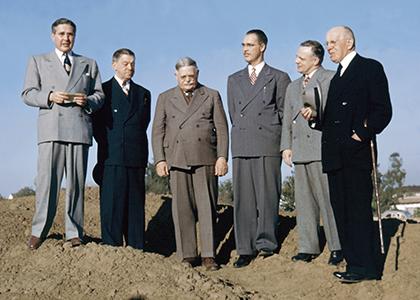
People from across the UCLA School of Law community are proud to be marking the law school’s 75th anniversary during the 2024-25 school year. For 12 months, a series of events, publications, projects and programs will bring together friends and colleagues to reflect on their rich history of public service, access to justice, and outstanding legal education.
The celebration is rooted in an ethos that has driven the law school from the beginning.
“UCLA Law has played an important role on the local, national, and international stage.”
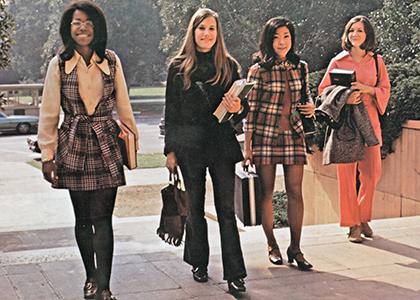
Today, Dean Michael Waterstone looks at that dynamic period and sees how it formed the enduring mindset of advocacy, invention and unity that characterizes the law school.
“UCLA Law was united by commitments that we continue to hold today: a determination to care for our neighbors, engage in a cutting-edge education, and achieve excellence while creating a more open and equitable legal profession,” Waterstone wrote in a message that kicked off the anniversary celebration. “UCLA Law has played an important role on the local, national, and international stage. Our faculty members have been at the forefront of every key legal and policy debate during that period, serving as thought leaders and changemakers. Our alumni have held key positions in law, business, politics, and civil society, bringing our values into action around the world. And every day, our students have shown up, committed to bettering themselves and making a meaningful difference in their communities.”
“This anniversary is a moment to reflect on everything that makes us great and the even better opportunities that are on the horizon.”
Anniversary programming starts with a special law school tailgate at the UCLA football game on September 28 and Reunion 2024 weekend on October 19 and 20. More events in the spring will include a block party for the entire UCLA Law community and the Alumni of the Year awards ceremony (details on these activities are to come).
A special 75th anniversary website features details on anniversary events and much more. It will be updated throughout the year and allows readers to be inspired by stories from the past three-quarters of a century and focus on the values that guide UCLA Law.
“This anniversary is a moment to reflect on everything that makes us great and the even better opportunities that are on the horizon,” Waterstone said to the community. “Thank you! I’m thrilled to be on this journey with you.”
 Click image or here to open PDF.
-
J.D. Business Law & Policy
-
J.D. Media, Entertainment and Technology Law & Policy
-
LL.M. Program
-
Master of Legal Studies
-
S.J.D Program

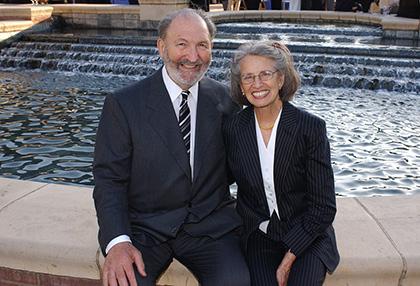
When Ralph Shapiro died on August 14, UCLA School of Law lost one of its most distinguished alumni and best friends. Shapiro was a Double Bruin who received his bachelor’s degree from UCLA in 1953 and graduated from the law school in 1958, and he enjoyed a remarkable career as a lawyer, businessman, philanthropist, and eminent supporter of his alma mater.
“In our community of many great leaders, Ralph was a titan.”
Ralph J. Shapiro, a UCLA alumnus, renowned business leader, philanthropist and enthusiastic, lifelong supporter of the university, died Aug. 14 at the age of 92. He was a proud Bruin and for more than half a century played an immense role in the life of the campus as a donor, volunteer, mentor, advisor, board member and friend.
Shapiro’s family immigrated to the United States from Lithuania when he was a boy and settled in the Los Angeles neighborhood of Boyle Heights. He earned a bachelor’s degree in business administration from UCLA in 1953 and a juris doctorate from UCLA School of Law in 1958. UCLA was also where Shapiro met his wife, Shirley, an alumna of the class of 1959 who received her bachelor’s in education.
Throughout his life, Shapiro credited UCLA with providing him and so many others with the opportunity of a world-class public education. He was thankful to the university and dedicated to investing in its faculty and students to enable them to do great things for the betterment of the world. He and Shirley gave generously to a broad range of campus areas, including athletics, the arts, law, music, dentistry, nursing and more.
“UCLA has lost one of its great champions with Ralph’s passing. His contributions to our campus are almost incalculable — he had a great vision for what UCLA could be and dedicated himself to helping the university realize its highest aspirations,” said former UCLA Chancellor Gene Block. “Over many decades, Ralph and Shirley made gifts to more than 100 departments and touched the lives of countless individuals in ways that were profound, inspiring and impactful. Our deep gratitude and our heartfelt sympathies are with his family, friends and loved ones.”
Across six decades of support and leadership, the Shapiros displayed their profound commitment to the Bruin community, giving more than 1,600 gifts — twice as many as any other family at UCLA — to virtually every corner of campus. They endowed more than 20 faculty chairs in areas including piano performance, pediatrics, the study of developmental disabilities and other specialties in health sciences and law, and created the Shirley and Ralph Shapiro Directorship at the Fowler Museum. Grateful for the scholarship support that enabled him to attend UCLA — which he credited with changing his life — Shapiro remained a firm believer in the power of student support. Over the years, he and Shirley provided scholarship aid to more than 700 students. In addition, he was a loyal fan of Bruin athletics and held basketball and football season tickets for more than 30 years.
A tireless advocate for the university, Shapiro took great pride in motivating others to support UCLA’s highest-priority needs. Over the years, he served on 30 UCLA boards and committees, including the cabinets for Campaign UCLA and the Centennial Campaign, the medical sciences executive board at the David Geffen School of Medicine at UCLA, and The UCLA Foundation. He was president of UCLA School of Law’s alumni association from 1965–66 and a member of its board of advisors for decades. In 1983, he received the school’s Alumnus of the Year award.
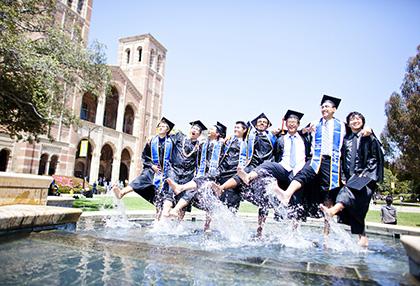
In recognition of his commitment to UCLA’s success and impact, Shapiro was named the university’s Alumnus of the Year for Public and Community Service in 2008. And in 2019, along with Shirley, he received the university’s highest honor, the UCLA Medal, which recognizes contributions to society that illustrate the highest ideals of UCLA. The Shapiro Fountain on Royce quad and the Shapiro Courtyard adjacent to the law school were both named in recognition of the couple’s prolific giving.
“As generous as Ralph was with his financial support of UCLA, he was equally giving of his time and counsel,” said Rhea Turteltaub, UCLA’s vice chancellor for external affairs. “He and Shirley cherished every opportunity for meaningful involvement in the life of the university, lending their energy over the years to dozens of boards and committees. Ralph was a fierce advocate for UCLA, time and again providing sage advice and trusting in leadership to make the most effective use of his philanthropic support as together we shaped the future of the university. He played an outsized role in making us the flourishing institution we are today.”
Recognized as a leading investor in commercial real estate in Southern California, as well as in diversified securities, Shapiro served as chairman of the Avondale Investment Co. Early in his professional life, he practiced corporate and real estate law in Beverly Hills, helping major corporations settle complex disputes.
Shapiro’s generosity extended beyond UCLA as well. His passion for philanthropy led to the establishment of the Shapiro Family Charitable Foundation in support of a range of interests, including the environment, arts, health and education. A particular focus of his attention was support for families affected by cerebral palsy. He and Shirley invested their hearts in this cause, personally giving their time and care to parents and children alike.
Acknowledging Shapiro’s incomparable contributions and lasting impact, UCLA Interim Chancellor Darnell Hunt said, “Ralph Shapiro led a truly extraordinary life. Through his passion, hard work and talent, he scaled great heights, and through it all, he kept UCLA near and dear — never missing an opportunity to make our university a better place to learn, to teach, to work or to carry out research. Across the span of a life dedicated to higher education and service, Ralph Shapiro never forgot his alma mater, and the Bruin family will never forget him.”
Shapiro is survived by Shirley and his children, who share his devotion to public service and the greater good.
Gifts in Shapiro’s memory can be made to the Shapiro Luskin School Special Patient Care Fund.
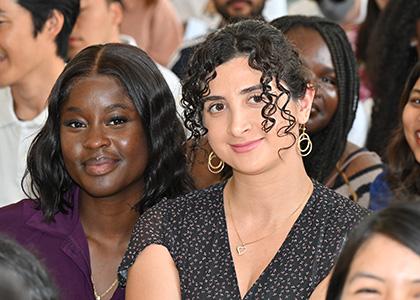
As UCLA School of Law kicks off its 75th year, a cohort of remarkably accomplished students has joined the law school’s community and is poised to make an impact from the start.
The incoming students include 317 who are pursuing a juris doctor degree (J.D.) as members of the Class of 2027, 220 who are working toward a master of laws degree (LL.M.), and 89 who are earning a master of legal studies degree (M.L.S.).
“This is a big moment in your lives. You are about to embark on an incredible adventure.”
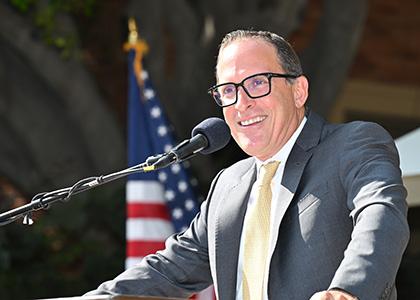
Under sunny and comfortably warm skies, UCLA Law officially welcomed the new students at its annual convocation ceremony, on UCLA’s Dickson Court, on August 23. Speakers included UCLA Law dean Michael Waterstone, Student Bar Association president Scott La Rochelle ’25, and Judge Philip Gutierrez ’84 of the U.S. District Court for the Central District of California.
“You are now members of our community, and we know you will continue to make us better. This is a big moment in your lives. You are about to embark on an incredible adventure,” Waterstone said. “You will figure out how to craft innovative and joyous ways to make a positive impact in the legal profession, your communities, and the world.”
He went on to emphasize that, at UCLA Law, the students will gather skills to help them tackle problems in a society where traits including compassion and reflection seem to be in dwindling supply. “Being a great lawyer means that you have to be able to understand someone else’s point of view – whether it’s your client, a colleague, opposing counsel, or a judge. And you must articulate your own perspective with calm, with clarity, and even with kindness.”
“Empathy starts really with one thing, and that’s listening.”
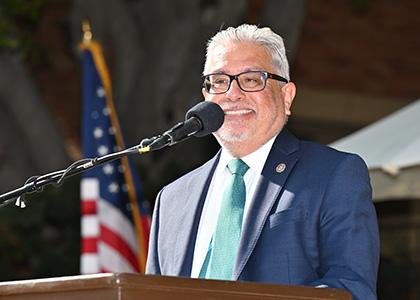
Gutierrez, a law school alumnus and federal judge, administered the Oath of Professionalism and elaborated on the same theme – the importance of developing relationships, maintaining strong ethical behavior, and practicing empathy as a path to success in the law and life.
“Empathy starts really with one thing, and that’s listening,” he said. “You can’t have empathy for somebody else unless you really listen to what that person has said about what they’re going through, how they’re feeling, or what their opinions are.”
The entering J.D. class is 54% women and 62% who identify as students of color. In addition, 18% of the class members are the first in their families to earn a four-year college degree.
Among their many impressive records of accomplishment and service, incoming J.D. students include one Fulbright Award recipient, nine high school valedictorians, and eight people who graduated from UCLA Law’s Law Fellows Program. Four have already earned Ph.D.s, and 26 hold master’s degrees. Many come to law school after having worked at leading companies, law firms, and government offices, including the White House; U.S. Senate and House of Representatives; U.S. Departments of State, Justice, Defense, and Veterans Affairs; FDIC; CIA; and FBI. With many star athletes, artists, businesspeople, published writers, scientists, and teachers, the class includes speakers of at least 28 languages.
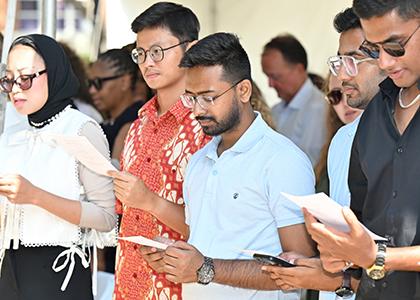
New students also come with a longstanding commitment to public service. They have volunteered or worked for Asian Americans Advancing Justice, the Center for American Progress, the Coalition for Humane Immigrant Rights of Los Angeles, the Council on American-Islamic Relations, the International Rescue Committee, Kids in Need of Defense, the NAACP, the National Women’s Law Center, and the Peace Corps, as well as a wide array of other organizations that advocate for and protect the rights of people around the country and world. (Read more about this impressive group on the J.D. class profile.)
Several other people who are working toward a J.D. degree have earned a warm welcome to the law school community this year. These include 35 students who came onboard as members of the Class of 2026, now beginning its second year, and six visiting students who will complete their legal education at UCLA Law.
Already lawyers in various areas of practice and work, the new LL.M. students come from 41 countries, having earned their law degrees from leading schools on six continents. A full 60% of the class is made up of female students.
The cohort includes people who have worked at major global law firms and corporations, as well as two Fulbright scholars and people who have served in the Supreme Court of Japan, the Saudi Arabian Ministry of Finance, the Constitutional Court of Korea, the Italian Interior Ministry, the New York Department of Financial Services, and the U.S. Small Business Administration. There are prosecutors from Japan and Korea; judges from Germany, Japan, and Korea; and clerks for the Supreme Court of India and the Higher Regional Court of Vienna. Two students are Health and Human Rights Fellows from Ghana and Russia, and two others, from Ireland and the United States, are Critical Race Studies Fellows.
The law school also welcomed two S.J.D. students: one, from Chile, recently earned an LL.M. degree at UCLA Law and will embark on a project researching the effects of regenerative farming practices on environmental and human outcomes; another, from Nigeria, will conduct a comparative analysis of campaign finance laws in the United States, Canada, and Nigeria. In addition, 11 foreign exchange students join the law school community from partner schools in Austria, China, France, Germany, Israel, and Spain.
Members of the M.L.S. class are accomplished professionals who are attending UCLA Law to earn a degree that allows them to master legal principles and advance their careers but does not qualify them to practice law. This year marks the launch of the program’s online or hybrid model of education, and 45 incoming students are pursuing their degrees online, while 44 have chosen the hybrid option.
For the full incoming M.L.S. class, 71% of the students identify as female, 69% identify as students of color, and their average age is 35. As accomplished professionals and leaders in their fields, 46% are chief executives or vice presidents, 14% are directors or managers, and 43% hold advanced degrees. They work at the highest levels of journalism, nonprofits, business, city government, medicine, community affairs, and emerging technology.
-
J.D Environmental Law
-
J.D. Business Law & Policy
-
J.D. Critical Race Studies
-
J.D. David J. Epstein Program in Public Interest Law & Policy
-
J.D. International and Comparative Law
-
J.D. Law and Philosophy
-
J.D. Media, Entertainment and Technology Law & Policy
-
LL.M. Program
-
Master of Legal Studies
-
S.J.D Program

On June 21st, UCLA welcomed to campus over 500 of the entertainment industry’s most influential figures, as industry executives gathered for the 48th annual Entertainment Symposium, hosted by the
Donna Langley in the spotlight
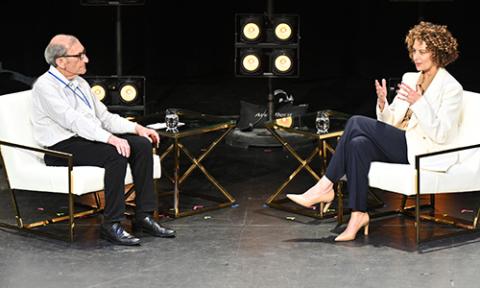
Donna Langley sat down with legendary entertainment lawyer Ken Ziffren ’65, who founded the much-heralded law firm Ziffren Brittenham as well as the Ziffren Institute. Their discussion, in the final session of the daylong conference, tied together many of the themes from the day’s panels, including how to get audiences into movie theaters, the future of streaming, the role of AI in the entertainment business, as well as Langley’s personal path to one of the top spots in the entertainment industry.
Prior to taking the helm of NBCUniversal’s films, TV and streaming content strategy last year, Langley spent two decades focused on feature films, involved in blockbusters including Oppenheimer, Jurassic World, The Super Mario Bros Movie, 50 Shades of Grey and Get Out.
Ziffren asked Langley how she decides what content to assign to traditional broadcast TV (such as NBC, Bravo or E!) versus streaming on Peacock. Langley said the decision is usually straightforward, based on the clear age difference between the streaming audience and the linear TV audience. Bravo content, she explained, does well on both platforms, but with minimal audience overlap.
“We are learning as we go,” she admitted. “Something we’re thinking about strategically right now is the idea of starting with a younger audience fanbase and then migrating that over to NBC. Whether it’s possible to age down that broadcast audience remains to be seen.”
On the box office’s failure to bounce back to pre-pandemic attendance levels, Langley showed cautious optimism. She predicted an uptick in the second half of the year, driven by popular franchises and overall increase in volume.
“Consumer behavior has shifted and it’s probably not coming back anytime soon. I’m not going to say never, because it’s all cyclical,” she added.
“One of the things we’re quite optimistic about is [that] Gen Z is a very reliable audience at the box office,” Langley said. “They’re not going to see everything. It’s appointment viewing and it has to have a lot of social energy around it. That audience will just as soon go to Inside Out, Oppenheimer or Barbie or Cocaine Bear or M3GAN. It’s platform- and genre-agnostic, but has to have social energy – something they can interact with others about.”
Langley drew applause with her response about the role of artificial intelligence by saying that first and foremost, “the labor piece of it has to be right.” Although she said the company is not currently using AI to make any movies, she conceded that it’s an inevitable part of the industry’s future.
“It’s a technology just like any tech innovation that the film industry has seen throughout its 100-year history, but it’s moving so much faster.”
Langley called for “good, clever, sophisticated copyright laws around our IP, so we’re not being disadvantaged” as well as the need for freedom to creatively use the technology.
“It should be exciting, but we’ve got to get the ethics of it right,” she concluded.
‘After the Streaming Wars’
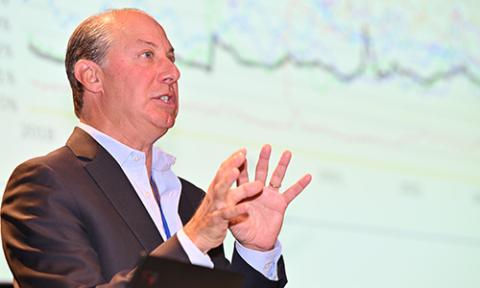
The foundation for the symposium’s conversations was laid out in the morning by Michael Nathanson, partner and senior research analyst at MoffettNathanson Research, who dissected the causes of the industry’s recent revenue loss. He pointed to rising inflation that led many consumers to tighten their spending by canceling their cable bundles and switching to streaming services. In just the past five years, 20 million U.S. homes cut the cord, he said. On the corporate side, Nathanson referenced “deflationary corporate strategies,” where companies attracted new subscribers by launching streaming services with rich content and especially low prices – Disney+, HBO Max and Peacock, for example – as well as a shift away from ad spending for TV and toward spending on ad-supported streaming and Internet services.
“As a result of this perfect storm, traditional media companies now realize that they have to adapt to this new world just as new entrants become more aggressive,” said Nathanson.
Consumers are settling into an average of four streaming products per home, according to Nathanson. But there is still a great deal of churn among customers – averaging 5% across the board, except for Netflix, which is the best at less than 2%.
Going forward, Nathanson predicts large-scale mergers and acquisitions, companies exiting the streaming business, an increase in third-party content licenses and a greater focus on sports content – which continues to be a big winner.
‘Nothing But Net – How Sports and Content Are Scoring’
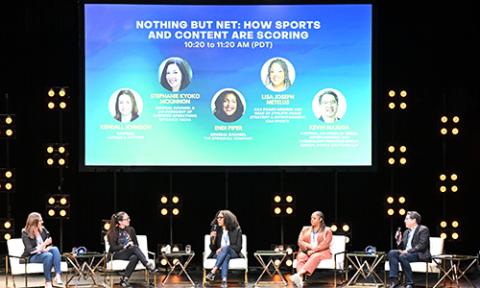
With sports in the spotlight, three experts shared perspectives on the opportunities for content creators and athletes in the session “Nothing but Net – How Sports and Content Are Scoring,” moderated by Latham & Watkins’ Kendall Johnson and Gibson Dunn & Crutcher’s Kevin Masuda, who is also a Ziffren Institute Advisory Board member.
“A lot of the leagues are thinking about how to engage viewership and fans outside of the actual season. That’s where we come in,” said Stephanie Kyoko McKinnon, general counsel at Skydance which produces Hard Knocks: Off Season and NFL Draft: The Pick is In with NFL Films.
The behind-the-scenes content featuring high-profile athletes or rising stars draws attention from sports fans while also bringing in new viewers through compelling characters and stories – which is especially important for attracting a Gen Z audience, explained Endi Piper, general counsel for The SpringHill Company which was founded by LeBron James and Maverick Carter. She went on to explain that athletes are also motivated to participate in documentaries, podcasts, and other platforms outside of their sport because it gives them an opportunity to show the world their authentic selves beyond their athletic prowess.
“They’re doing it because they want to have a voice – a lot of them don’t need the money,” Piper pointed out.
Lisa Joseph Metelus, CAA board member and head of athlete brand strategy & entertainment for CAA Sports, shared her perspective representing athletes who are interested in expanding their influence beyond the court or field. She said brands are capitalizing on the popularity of both sports and personal storytelling.
“Brands are recognizing that storytelling in general goes farther than putting a regular ad on TV,” said Metelus. “Every brand we’re speaking to right now wants to get away from traditional ads,” she says.
‘The Brands Rise Again’
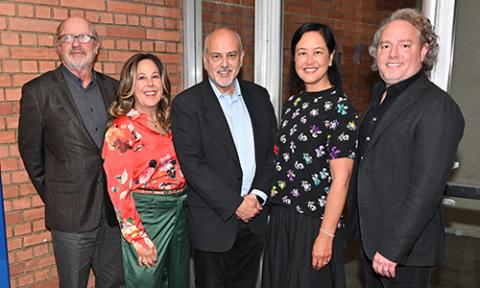
The rise of branded content epitomized by the ubiquity of Barbie was the topic of the panel “The Brands Rise Again!!” Leaders from Mattel, Sony Pictures Entertainment and Warner Bros. Pictures discussed how a brand’s fan base provides a built-in market for movies – whether that brand represent a popular toy, cartoon or famous athlete. So far this year, movies tied to existing brands have included Mean Girls, Dune 2, Kung Fu Panda 4, The Garfield Movie, and Inside Out 2.
“The audiences keep coming back,” explained moderator Michael Helfant ’83, of counsel for Loeb & Loeb LLP. “There’s an emotional connection audiences and consumers have to these brands.”
Mattel worked with 165 licensing partners on Barbie. But turning the world pink required complex agreements, reviews, approvals and timing around embargoed assets. Panelists discussed the book-length style guides that dictate how a brand can be portrayed by licensees, and the delicate dance between creators and those tasked with protecting a brand’s intellectual property.
Josh Silverman, Mattel’s chief franchise officer who worked with director Greta Gerwig on box-office-busting Barbie, says collaboration and trust between creators and brands are the alchemy for successful partnerships. It took a lot of courage for Mattel’s leadership to allow the movie’s marketing narrative to be “whether you love or hate Barbie, this movie is for you,” he said.
Panelists also discussed the pivotal role fans play for brands in generating movie buzz, and the careful balance between fandom and infringement. Eric Baum, SVP business and legal affairs at Sony Pictures Entertainment, explained that Ghostbusters’ cult following – with fans making their own costumes, proton packs and Ecto-1 vehicles – is what enabled the franchise to be reborn more than 30 years after the last film.
“You can’t then squash the enthusiasm for that kind of engagement once the new films come out,” Baum explained.
“Fans are what help drive the box office and the success of our films, so on the marketing side we lean heavily into our fans,” said Jade Alex, executive director of events and global publicity at Warner Bros. Pictures, who has helped promote brand-based films including Barbie and Elvis.
Panelists also acknowledged the post-pandemic growth in location-based entertainment, with Sony launching the indoor theme park Wonderverse near Chicago earlier this year, and Mattel slated to open an Adventure Park in Glendale, Arizona, in 2024.
‘The Good News About Theatrical Distribution’

In May, coverage of the movie industry was all doom and gloom but pivoted to sunshine and roses by June. Paul Dergarabedian, senior media analyst at Comscore, set the tone for the panel on theatrical distribution by contrasting the two months’ headlines. Just like Inside Out, the movie industry is all Anxiety and Depression followed by Joy, he said.
“Those of us who’ve been in industry for 10-plus years understand it ebbs and flows,” said Nikkole Denson-Randolph, senior vice president of content strategy & inclusive programming at AMC Theaters. “We’re going to have good and bad weeks, but we always come out on top.”
The human connection people feel in theaters by sharing an experience is what keeps people coming back, despite the challenges of the past few years. In fact, returning to celebrate old movies remains popular. This year, Shaun of the Dead, Coraline, The Matrix and Neverending Story will all be back in theaters for anniversaries of their original release.
“You can create a cultural moment in a theater,” said Scott Forman, executive vice president & general sales manager at Warner Bros. Pictures, pointing especially to the experience of Taylor Swift fans flooding theaters to sing along and dance to The Eras Tour movie.
The smashing success of Barbie, Oppenheimer and Taylor Swift: The Eras Tour benefited the entire industry, the experts said. “The most important thing is that it means we get to keep making movies,” said Lisa Bunnell, president of distribution at Focus Features. “I think it’s important we give that chance to more voices, younger voices, more diverse voices.”
While the rhythm of releases is still being disrupted by last year’s labor strikes, panelists expect to see greater diversity and options in the theater by the second half of this year – and giving viewers more choices is key to filling seats, Bunnell argued. But at the end of the day, the theater remains a place where people love to go to connect with each other and human stories.
“If the pandemic didn’t do away with theaters,” Dergarabedian concluded, “nothing will.”
‘AI on Screen: Setting the Ethical Standards for Tomorrow's Entertainment’

The ethical and legal implications of using AI in entertainment was the topic of a lively John H. Mitchell Panel on Ethics and Entertainment, moderated by Ilissa Samplin, partner at Gibson, Dunn & Crutcher LLP.
Rijul Gupta, CEO and founder of DeepMedia AI, drew a resounding “no” from panelists and audience members alike when he asked whether there are any fair-use exceptions to train AI models on copyrighted work.
David B. Dreyfus, general counsel for the Directors Guild of America, argued that AI companies should have to license works in order to “feed” them to their models. “We think it should be transparent,” said Dreyfus. “How can these companies ingest the entire internet but not disclose what they ingested?”
Ian Slotin, SVP of intellectual property at NBCUniversal, pointed out that existing laws on using name, image and likeness are technology neutral, and can provide broad protection for creators like Scarlett Johansson, who’s voice was mimicked by an OpenAI product.
“There are gaps, for sure, that need to be addressed, but when we deal with those gaps, what we think about as content creators is making sure there’s breathing room for the first amendment,” said Slotin.
Gupta, whose company detects AI-generated deep fakes, agreed that the speed of change adds complexity. Plus, he pointed out, thoughtful conversations like these are not ubiquitous, and frameworks are needed to protect against those inclined to use the technology to cause harm.
Liz Randall, head of business operations for CAA, said the agency rolled out CAAVault, which aims to help clients secure their digital likeness and voices and allow others to license them – with consent, credit and compensation. She sees this as a vital step in giving artists legal recourse against those who use their digital likeness or voice without consent.
The conversation then turned to AI’s outputs – from still images and short films – and whether those deserve to be copyrightable.
Panelists agreed that while some AI-produced works may not earn copyright protection, on the other end of the spectrum examples like the AI short film Air Head required so much human input that they surely deserve copyright.
“Realistically, where the lines are going to be drawn is going to have to come from the courts,” said Dreyfus. “With new and improved models coming out every week, the technology is moving far too fast.”
The speed of AI advances is just one of the many industry disruptions explored by panelists throughout the day. But if industry leaders are fazed by it, they weren’t showing it at the symposium.
“We have to be believers. We have to be optimists,” Langley said about the viability of broadcast networks. And on campus this past June at least, that optimism prevailed across the entire entertainment ecosystem.
-
J.D. Media, Entertainment and Technology Law & Policy
UCLA School of Law’s Criminal Justice Program has published a report that sheds light on the federal, state and local laws and regulations that encourage collaboration between local law enforcement agencies and Los Angeles County’s child protective services agency, the Department of Children and Family Services (DCFS).
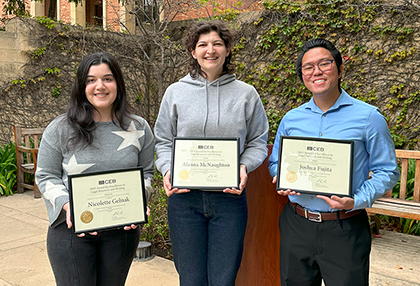
For seven students in UCLA School of Law’s first-year Legal Research and Writing course, the rewards for their achievements in the classroom far exceeded the invaluable education that they received in the ins and outs of crafting legal briefs and other fundamental documents.
In April, the students were celebrated at a ceremony that the law school hosted with Continuing Education of the Bar (CEB) for their outstanding work during the 2023-24 year.
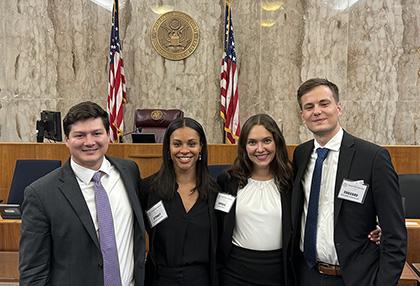
UCLA School of Law’s A. Barry Cappello Trial Team had another year for the ages. The team won 11 competitions, finished the year at No. 1 in every national ranking and won the National Trial Competition for a record fourth consecutive year.
“UCLA Law’s dominance in the trial competition community is crystal clear”
UCLA Law thus ended the year once again at the top of all three national trial competition rankings:
- Gavel Rankings, run by Hofstra School of Law, awarded UCLA Law 141 points for the 2023-24 season. (The next highest school had 58 points.) It was the fifth consecutive year in which UCLA Law finished No. 1.
- Trial Competition Performance Rankings, run by Fordham University School of Law, assigned UCLA Law 49 points for the season. (The next highest school had 28 points.) It was the fifth consecutive year in which UCLA Law finished No. 1.
- The Tournament of Champions, sponsored by the National Institute of Trial Advocacy, ranks every law school’s results over the most recent three-year period. UCLA finished the year with an all-time record of 48 points. (The next highest school had 15 points.) It was the fourth year in a row in which UCLA Law ranked No. 1.
“UCLA Law’s dominance in the trial competition community is crystal clear,” says Jared Rosenblatt, a special professor of law at Hofstra University’s Maurice A. Deane School of Law, who runs the Gavel Rankings. “UCLA Law is so far ahead of everyone else that if they didn't compete for the next five years, they would still be ranked first in the nation.”
Alabama judge Jim Roberts directs the trial teams at Samford University’s Cumberland School of Law and serves on the Tournament of Champions board of directors. “For the fourth year in a row, UCLA Law has earned the most TOC points in the country – and this year they broke their own record for highest points in TOC history,” he says. “This accomplishment is a testament to the incredible coaching of Professor Bernstein and his leadership of the UCLA Law program.”
Over the course of the season, the Cappello team was assisted by 19 coaches – including 16 alumni. “It’s not a coincidence that our best year was also the year when the most alums coached and mentored our students,” says Bernstein. “We were also fortunate to have help from two wonderful coaches who were new to our program, Nat Warner and Amanda Sadra. I hope they will continue to teach our students for years.”
During the 2023-24 school year, trial team members included Andrew Burnquist ’24, Edouard Goguillon ’24, Eirene Oji ’24, Erica Kelley ’24, Alara Abbasi ’24, Ireland Larsen ’24, Kelly Koehnen ’24, Kim Bittinger ’24, Marisol Alvarez ’24, Max Gordon ’24, Natalie Manoogian ’24, Nolan Cubero ’24, Peter Jones ’24, Sophia Cherif ’24, Sydney Gaskins ’24, Kensington Cotter ’24, DeAnna Christensen ’25, Eddy Chikukwa ’25, Jade Magaña ’25, Jordain Thompson ’25, Joseph Dale ’25, Micalyn Struble ’25, Nathan Mostow ’25, Nick Boroski ’25, Peter Martin ’25, Rachel Oda ’25, and Sara Delacey ’25.
Coaches included Aidan Welsh ’19, Christian Cotter ’23, Deeksha Kohli ’20, Kyle DeCamp ’19, Avery Hitchock ’21, Nathaniel Warner, Amanda Sadra, Natalie Garson ’22, Jack Eyers ’21, Sarah Stebbins ’23, Enrico Trevisani ’22, Stephen Johnson ’22, Celebre Fouka-Nganga ’23, Tiffany Sarchet ’21, Corey Wilson ’19, Pauline Alarcon ’22, Andrew Gordon ’22, Kenny Capesius ’22 and Justin Bernstein.
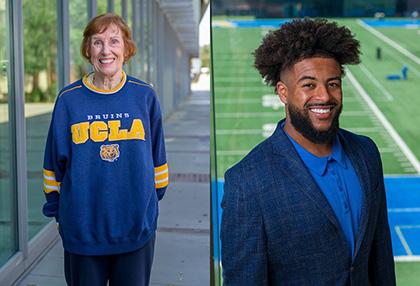
Two distinguished members of the UCLA School of Law community – Donna Cox Wells ’92 and Chase Griffin M.L.S. ’24 – are among the distinguished graduates who were honored with UCLA Awards by the UCLA Alumni Association for their extraordinary achievements, leadership and contributions to the university, their communities and the world.
-
Master of Legal Studies