Join us as we sit down with the Mayor for a report on the state of our unhoused community. What positive results can she share with us? What have been the greatest challenges? What are the roles of philanthropy, government, and business in solving this crisis? What can each of us do to support this herculean effort?
Keynote Speaker: The Honorable Karen Bass, Mayor of the City of Los Angeles
In conversation with: Kevin Murray, President & CEO, Weingart Center Association
With Dean Michael Waterstone to make welcome and introductory remarks
A landmark, magisterial history of the trial of Japan’s leaders as war criminals—the largely overlooked Asian counterpart to Nuremberg.
In the weeks after Japan finally surrendered to the Allies to end World War II, the world turned to the question of how to move on from years of carnage and destruction. For Harry Truman, Douglas MacArthur, Chiang Kai-shek, and their fellow victors, the question of justice seemed clear: Japan’s militaristic leaders needed to be tried and punished for the surprise attack at Pearl Harbor; shocking atrocities against civilians in China, the Philippines, and elsewhere; and rampant abuses of prisoners of war in notorious incidents such as the Bataan death march. For the Allied powers, the trial was an opportunity to render judgment on their vanquished foes, but also to create a legal framework to prosecute war crimes and prohibit the use of aggressive war, building a more peaceful world under international law and American hegemony. For the Japanese leaders on trial, it was their chance to argue that their war had been waged to liberate Asia from Western imperialism and that the court was victors’ justice.
For more than two years, lawyers for both sides presented their cases before a panel of clashing judges from China, India, the Philippines, and Australia, as well as the United States and European powers. The testimony ran from horrific accounts of brutality and the secret plans to attack Pearl Harbor to the Japanese military’s threats to subvert the government if it sued for peace. Yet rather than clarity and unanimity, the trial brought complexity, dissents, and divisions that provoke international discord between China, Japan, and Korea to this day. Those courtroom tensions and contradictions could also be seen playing out across Asia as the trial unfolded in the crucial early years of the Cold War, from China’s descent into civil war to Japan’s successful postwar democratic elections to India’s independence and partition.
From the author of the acclaimed The Blood Telegram, which was a Pulitzer Prize finalist, this magnificent history is the product of a decade of research and writing. Judgment at Tokyo is a riveting story of wartime action, dramatic courtroom battles, and the epic formative years that set the stage for the Asian postwar era.
_________
Professor Gary Bass, the William P. Boswell Professor of World Politics of Peace and War at Princeton University, is the author of Judgment at Tokyo: World War II on Trial and the Making of Modern Asia (Knopf); The Blood Telegram: Nixon, Kissinger, and a Forgotten Genocide (Knopf); Freedom's Battle: The Origins of Humanitarian Intervention (Knopf); and Stay the Hand of Vengeance: The Politics of War Crimes Tribunals (Princeton University Press).
Judgment at Tokyo was named one of the year’s 10 best books by The Washington Post, 12 essential nonfiction books by The New Yorker, 100 notable books by The New York Times, and 10 essential books by The Telegraph; a New York Times Book Review editors’ choice; a best book of the year by The Economist, Foreign Affairs, and Air Mail; and the book of the week in The Observer and The Sunday Times.
The Blood Telegram was a Pulitzer Prize finalist in general nonfiction and won the Arthur Ross Book Award from the Council on Foreign Relations, the Bernard Schwartz Book Award from the Asia Society, the Lionel Gelber Prize, the Cundill Prize in Historical Literature, the Robert H. Ferrell Book Prize from the Society for Historians of American Foreign Relations, and the Ramnath Goenka Award in India. It was a New York Times and Washington Post notable book of the year, and a best book of the year in The Economist, Financial Times, and The New Republic.
Professor Kal Raustiala is the Promise Institute Distinguished Professor of Comparative and International Law at UCLA School of Law and Director of the Ronald W. Burkle Center for International Relations at UCLA.
Professor Hannah R. Garry is the Executive Director of The Promise Institute for Human Rights at UCLA School of Law.
Thursday, March 14, 202412:15 PM Pacific TimeIn-Person OnlyUCLA Law Room 1314
During the country's dictatorship from 1973-1985, Uruguayans suffered under crushing repression, which included the highest rate of political incarceration in the world. Debbie Sharnak will give a talk on her book, "Of Light and Struggle" which explores how activists, transnational social movements and international policy makers collaborated and clashed in response to this era, and during the country's transition back to democratic rule.
A special symposium celebrated Professor Gómez's retirement and honored her groundbreaking career and tremendous impact on Critical Race Studies, UCLA School of Law, and legal and academic communities at large.
Symposium Agenda
View video of the symposium here.
3 p.m. — Welcome
Remarks from
- Michael Waterstone, Dean of UCLA School of Law
- Cheryl I. Harris, Vice Dean for Community, Equality and Justice; Rosalinde and Arthur Gilbert Professor in Civil Rights and Civil Liberties
- Uriel Saldivar Esteban, J.D. Candidate '25 & Community Service Chair, UCLA Latinx Law Students Association
3:30 p.m. — Manifest Destinies: The Making of the Mexican American Race
Panelists will discuss Professor Gómez's groundbreaking 2007 text, which has been established as an essential resource for understanding the complex history of Mexican Americans and racial classification in the United States.
- Moderator: Jerry Kang, Distinguished Professor of Law; Founding Vice Chancellor for Equity, Diversity and Inclusion (2015-20), UCLA School of Law
- Genevieve Carpio, Associate Professor, César E. Chávez Department of Chicana/o Studies, UCLA
- Nicholas Espíritu (Law '04), Deputy Director, Legal, National Immigration Law Center
- Casandra Salgado (Ph.D. Sociology '19), Assistant Professor, Sociology, Arizona State University
4:30 p.m. — Break
4:45 p.m. — Inventing Latinos: A New Story of American Racism
Panelists will discuss Professor Gómez's most recent book exploring the impact of Latinos’ new collective racial identity on the way Americans understand race.
- Moderator: Aslı Ü. Bâli, Professor of Law, Yale Law School
- Walter Allen, Distinguished Professor of Education, Sociology, and African American Studies; Allan Murray Cartter Chair in Higher Education, UCLA School of Education & Information Studies
- Sherene H. Razack, Chair and Distinguished Professor, Gender Studies; Penny Kanner Endowed Chair in Women's Studies, UCLA
- Saúl Sarabia (Law '96), Founder and Director, Solidarity Consulting
5:45 p.m. — Keynote by Laura E. Gómez, Rachel F. Moran Endowed Chair in Law
Introduction by Devon W. Carbado, The Honorable Harry Pregerson Professor of Law, UCLA School of Law (Read by Executive Director of the Critical Race Studies Program Jasleen Kohli, with additional remarks.)
6:30 p.m. — Reception and Dinner in Shapiro Courtyard
Remarks from
- LaToya Baldwin Clark, Professor of Law; Faculty Director, Critical Race Studies Program, UCLA School of Law
- Jasleen Kohli, Executive Director, Critical Race Studies Program, UCLA School of Law
CO-SPONSORS
Water as a Weapon of War - Report
13 UCLA Law students are working on a pro bono project with the UN Special Rapporteur on the human rights to safe drinking water and sanitation, Mr. Pedro Arrojo- Agudo, to draft a report on the role of water as a weapon in conflicts.
Outstanding new members boost law school faculty and administration in 2023–24.
New Tenure-Track Faculty
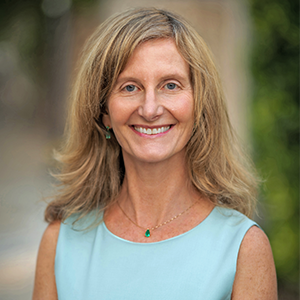 ARIELA GROSS
Distinguished Professor of Law
New Senior Leaders
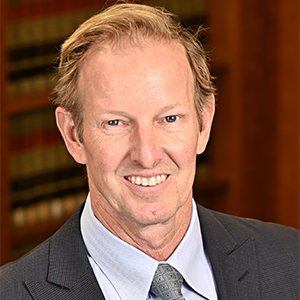 TIMOTHY CASEY
Director of Curricular Administration and Professor from Practice
Tim Casey will teach Professional Responsibility and provide support for the non-senate law faculty. He started his teaching career at Columbia Law School, where he established a Criminal Practice Clinic and received the Presidential Award for teaching. He also held an appointment as a professor of law at Case Western Reserve University. And he received a Fulbright award for research and teaching in Buenos Aires, Argentina.
Most recently, Casey served as the director of the STEPPS Program and professor in residence at California Western School of Law, where he oversaw an innovative program in legal ethics and lawyering skills. He also was a visiting professor at the University of San Diego School of Law. Before entering legal academia, he practiced law as a public defender in New York City.
Casey is an internationally recognized expert in experiential legal education. His research interests include legal ethics, surveillance and civil liberties, problem-solving courts and experiential pedagogy. He is a co-author of Legal Ethics in the Practice of Law (Carolina Academic Press, Fifth Edition, 2019), and his scholarship has appeared in law reviews including UC Davis Law Review and SMU Law Review. He serves as chair of the Legal Ethics Committee of the San Diego County Bar Association, a board member for local and international non-profit organizations, and a member of the editorial board for the peer-reviewed Clinical Law Review.
He received his B.A. from Boston College, J.D. from UC Law San Francisco and LL.M. from Columbia Law School.
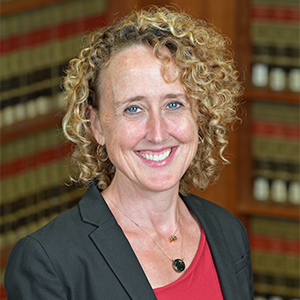 HANNAH GARRY
Executive Director of the Promise Institute and Professor from Practice
Hannah Garry joins UCLA Law as executive director of the Promise Institute for Human Rights and professor from practice. Garry has devoted her legal career to seeking justice and accountability for human rights abuses and atrocity situations across the globe, while making the U.S. a destination for the study and practice of human rights law.
She joins UCLA Law from USC Gould School of Law, where she was clinical professor of law and founding director of the International Human Rights Clinic for 12 years. Her areas of teaching and scholarship include international criminal law, transitional justice, international human rights law and international refugee law. She has supervised student attorneys in the clinic on cases and projects nationally and internationally that address atrocity crimes, refugee rights, fair trial rights, gender justice, human trafficking and systemic racism.
Garry’s career as an international human rights advocate, scholar and teacher took root when she was a graduate student at Oxford University’s Refugee Studies Centre. After graduation, she was hired by Oxford as a field researcher visiting refugee camps throughout Uganda and Kenya for two years where she witnessed and documented first-hand the abuses refugees endure in exile while under the protection of the international community.
Garry has held many other academic and expert legal advisor positions, including in international criminal courts and leading human rights organizations, and she has been quoted widely in major media outlets. Last year, she was a Fulbright Scholar at the University of Oslo Law’s PluriCourts Centre in Norway.
Garry earned her J.D. from UC Berkeley and master’s in international affairs from Columbia University.
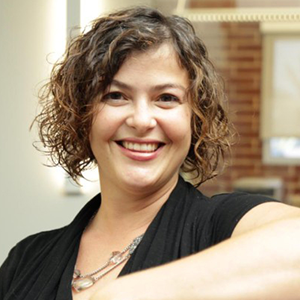 MELISSA GOODMAN
Executive Director of the Center on Reproductive Health, Law, and Policy
Melissa Goodman joins UCLA Law as the inaugural executive director of the Center on Reproductive Health, Law, and Policy after a five-year tenure as the legal and advocacy director for the ACLU of Southern California. There, Goodman led 60 attorneys across Southern California and oversaw the department’s visioning and strategy, strategic planning, intersectional issue and cross-team collaboration and resource allocation. In doing so, she helped lead statewide legislative, electoral and organizing strategy. She also co- chaired the national ACLU’s Gender Justice Task Force.
Goodman previously spent a decade as the ACLU SoCal’s Audrey Irmas Director of the LGBTQ Gender and Reproductive Justice Project, and as a senior litigation and policy counsel for reproductive and LGBTQ rights at the New York Civil Liberties Union. In those roles, she led and participated in reproductive justice, LGBTQ and gender equity litigation, as well as policy advocacy campaigns. Along the way, Goodman led or co-counseled an array of high-profile cases, including those involving pregnant unaccompanied immigrant minors; gay, bisexual and transgender prisoners; and same-gender couples.
Goodman clerked for Judge Frederic Block of the U.S. District Court for the Eastern District of New York. She earned her B.A., magna cum laude, from New York University and her J.D. from NYU School of Law.
New Lecturers
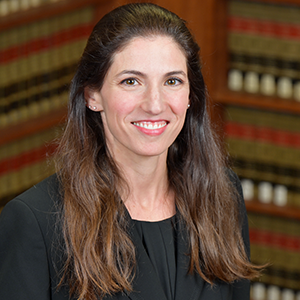 EMILY CHURG
Lecturer in Law
Emily Churg teaches Legal Research and Writing. She previously practiced complex commercial litigation at WilmerHale and ran her own bar exam preparation company. She has also taught legal writing at USC Gould School of Law and undergraduate writing at Arizona State University.
She earned her B.A., with honors, from UC Santa Cruz; her Ph.D. in rhetoric, composition and linguistics from Arizona State; and her J.D., Order of the Coif, from UC Davis School of Law. After law school, she clerked for Judge S. James Otero of the U.S. District Court for the Central District of California.
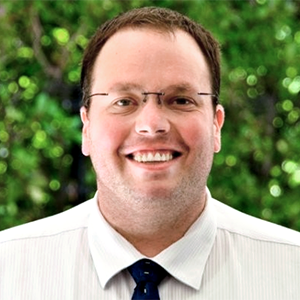 THOMAS WANEBO
Lecturer in Law
Thomas Wanebo teaches Legal Analysis, Writing, and Research for LL.M. students. He currently works as a trial attorney at Neighborhood Legal Services of Los Angeles County, defending low-income families against eviction. He began his career as a litigation associate at Irell & Manella in Los Angeles.
Wanebo earned his B.A. from Colorado State University and his J.D. from UCLA Law, where he was a senior editor of the UCLA Law Review. His publications include the article “Remote Killing and the Fourth Amendment: Updating Constitutional Law to Address Expanded Police Lethality in the Robotic Age,” which appeared in the UCLA Law Review.
New Fellows
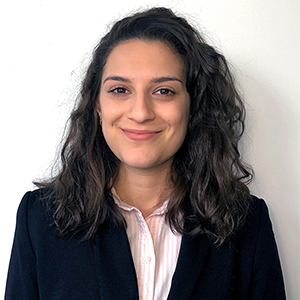 MELODI DINCER
UCLA Institute for Technology, Law and Policy Fellow
Melodi Dincer will join UCLA Law in January 2024 as a fellow with the UCLA Institute for Technology, Law and Policy. Her work focuses on helping social movements fight algorithmic violence and build transformative futures.
She was previously an appellate advocacy fellow with the Electronic Privacy Information Center and has been a legal research fellow and clinical supervising attorney at NYU School of Law, where she earned her J.D. She earned her B.A. from Brown University.
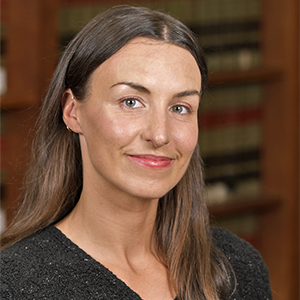 RUTHIE LAZENBY
Shapiro Fellow in Environmental Law and Policy
As the Shapiro Fellow in Environmental Law and Policy for 2023–25, Ruthie Lazenby will be focusing on energy law and regulation. She was previously a staff attorney in the Environmental Justice Clinic at Vermont Law School and a legal fellow in the environmental justice program at New York Lawyers for the Public Interest.
She earned her B.A. from Wesleyan University and her J.D. from Yale Law School, where she was an editor of the Law and Political Economy Blog.
UCLA Law faculty members publish award-winning books on a wide range of topics. See our faculty's most recent books below.
RICHARD ABEL