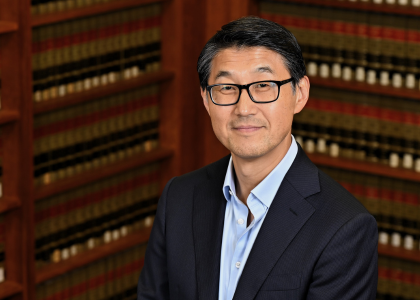
UCLA School of Law professor Jerry Kang, who served as the university’s founding vice chancellor for equity, diversity and inclusion, has spent his career examining the intersection of race, technology, and civil rights.
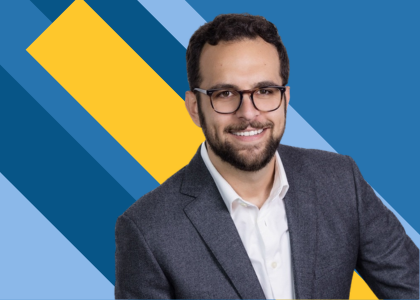
Ben Ryzak '18 went from the wait list at UCLA School of Law to negotiating million-dollar deals with Hollywood stars — and he credits the law school community that took a chance on him for launching his career. As vice president of business and legal affairs at FilmNation Entertainment, Ryzak navigates the complex world of independent film development, financing, and production, negotiating deals with A-list talent and crafting creative structures for projects at the independent production company that produced the Academy Award-winning movies Anora and Conclave.
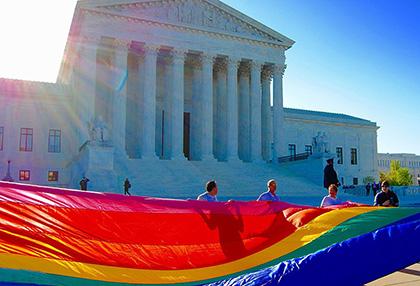
Milestones — especially in decades — usually call for celebration. The 10th anniversary of Obergefell v. Hodges, the Supreme Court case that made same-sex marriage legal nationwide, is different. There’s a sense of unease as state and federal lawmakers, as well as several judges, take steps that could bring the issue back to the Supreme Court, which could undermine or overturn existing and future same-sex marriages and weaken additional anti-discrimination protections.
A potential reversal casts shadows on same-sex marriage
Seven years after Obergefell, the Supreme Court overturned Roe v. Wade, rescinding the national right to abortion and raising fears for progressive policies.
In a concurring opinion, Justice Clarence Thomas explicitly called for the Court to revisit Obergefell. Justice Samuel Alito has echoed those sentiments, tacitly inviting legal challenges.
Despite the direction of the Supreme Court, Sears argues that Obergefell is not on the same legal footing as Roe v. Wade.
“There are significant differences between marriage equality and abortion,” he said. “Obergefell rests on both the due process clause and the equal protection clause. Roe was based squarely in privacy rights under due process. There's room for the court to say, ‘This is different.’”
Another key distinction is the legal concept of reliance, which in part acknowledges contractual agreements. Marriage, Sears says, is deeply embedded in legal, financial and familial systems.
“People start living together in anticipation that one day they will get married,” he said. “They start commingling resources. Eventually, they have a wedding. Often, people's families and friends help contribute to the wedding, and there are a lot of people relying on the fact that they are getting married. So this extension of reliance extends far beyond the couple.”
Although support has dipped slightly in recent years among subsets of the population, public opinion polls have shown enduring majority support for same-sex marriage.
“The backlash against same-sex marriage created a national discussion, and then it became a political possibility,” Sears said. “Visibility increased, and our rights increased. I’m hoping we’re on the same trajectory for transgender people.”
While Sears believes the legal arguments in favor of Obergefell are strong, he adds a note of caution.
“We still have this Supreme Court,” he said. “That doesn’t mean they’ll necessarily pay attention to the strength of these arguments.”
The future of anti-discrimination policies
Last year, at President Donald Trump’s urging, the GOP’s 2024 platform removed language condemning same-sex marriage, and only devoted a few sentences to the subject. While some saw this as progress in solidfying federal civil rights protections for LGBTQ people, Sears and others see complexity, especially as recent data has shown increased support among Republicans for restrictive bathroom bills.
“There are still those who are very committed to a faith-based morality that excludes LGBTQ people, and we’re seeing that play out with ferocious anti-transgender policies,” Sears said. “There are those who don’t believe transgender people exist, and they’re trying to enforce that.”
Williams Institute research shows an estimated 1.6 million people ages 13 and older in the U.S. identify as transgender.
The current administration has issued executive orders banning trans women from women’s sports, excluding transgender people in the military and an order stating that the U.S. recognizes only two sexes.
“There's a lot of negative policy being developed toward LGBTQ people in the country today, and it's easy to get discouraged by that,” Sears said. “Still, LGBTQ communities have survived some difficult times, and many courts are demonstrating that there is still a role for research and the rule of law.”
More recently, the Supreme Court upheld Tennessee’s law banning access to gender-affirming care for transgender youth.
The decision impacts the 112,400 transgender youth ages 13-17 who live in Tennessee and 24 other states that have similar laws banning access to gender-affirming care for transgender youth.
Those in need of care could travel to states that still offer access, creating a patchwork system not dissimilar to same-sex couples seeking marriage prior to Obergefell.
Obergefell passes its milestone in an atmosphere of uncertainty, under intermittent threat along with other rights for LGBTQ communities, but Sears and his team press on with the institute’s mission.
“The role of the Williams Institute is to continue to do research so that laws and polices reflect the realities of LGBTQ people’s daily lives, not the assertions and myths that are made up about them.”
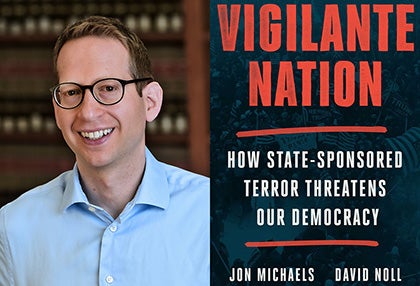 With recent politically motivated murders in New York, Minnesota, and Washington, D.C., and other attacks in Colorado and Pennsylvania, acts of political violence appear to be on the rise.

When the U.S. Supreme Court decided the case of Thompson v. United States in March, the justices’ unanimous decision brought relief for the defendant in the matter – and it was the latest victory for members of UCLA School of Law’s Supreme Court Clinic.
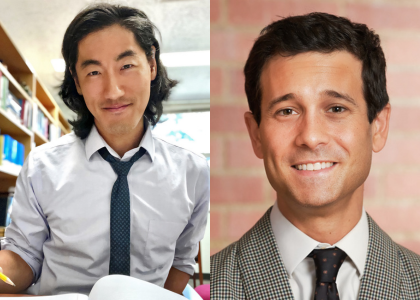
Real Estate Investment Trusts (REITs)—companies that own, operate, or finance income-producing real estate—have thrived by breaking the fundamental rules of good business, and two UCLA School of Law professors think they've figured out why.
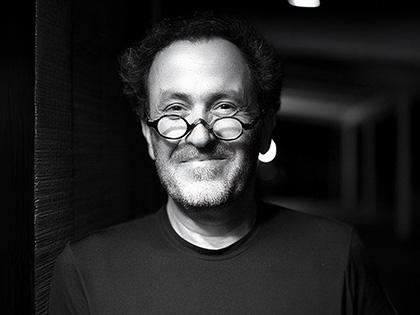
Mario Biagioli, a distinguished professor of law and communication at UCLA and leading scholar of law and technology, died on May 17 after a long illness.
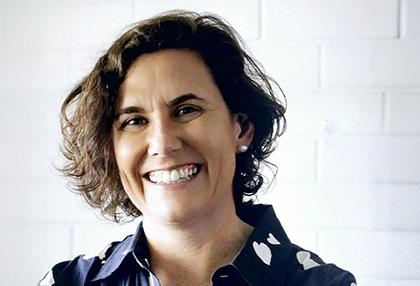
Bolstering UCLA’s strength and impact in law and technology, Julia Powles is joining the Institute for Technology, Law and Policy as its executive director. Powles comes aboard after a worldwide search for a leader of the five-year-old institute, which is a collaboration between UCLA School of Law and UCLA Samueli School of Engineering.
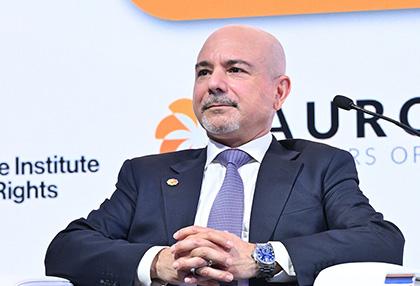
Rapid changes in the global order, finding optimism under great duress, rebuilding the international rule of law, and blazing a positive path forward were the issues at hand as thought leaders gathered at UCLA’s Luskin Conference Center earlier this month for the 2025 Human Rights and Humanitarian Forum.
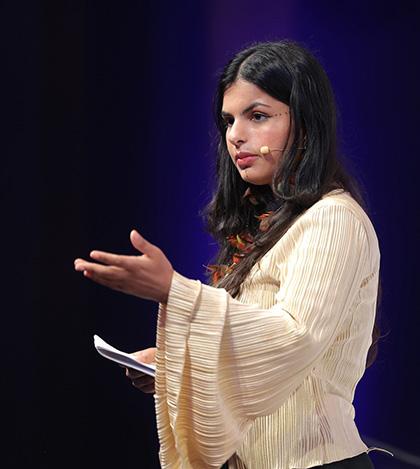
Earlier in the day, Michael Waterstone, dean of UCLA Law, welcomed participants and emphasized the valuable role that each person played in carrying the cause of human rights.
“It is so fitting that this event is happening at UCLA,” he said. “As the dean of UCLA Law, I experience time and again just how important it is that we are situated here, in this global city of Los Angeles, where we have the opportunity to make a meaningful impact in so many ways, from the local to the international.”
“Our mission is to empower the next generation of human rights lawyers and leaders, and to engage research and scholarship to drive real-world impact,” said Catherine Sweetser, interim executive director of The Promise Institute. “It was inspiring to hear from young people like Ana Giménez Pozzoli, founder of Ducha de Sol, and Ayisha Siddiqa ’27, founder of the Future Generations Tribunal (and a UCLA Law student), about the environmental issues that are crucial to their generation.”
The forum included the probing discussions “Global Pulse Check,” “The Future of Human Rights,” “Modern-Day Heroes: Lessons in Resilience from Aurora Humanitarians,” “Rising Generation: Young Activists Redefining Justice and Humanitarian Action,” and “Health and Human Rights: Grassroots Approaches for Lasting Impact.”
Noubar Afeyan, cofounder and chair of the Aurora Humanitarian Initiative and founder and CEO of Flagship Pioneering, emphasized the importance of resilient action in the face of growing inhumanity around the world.
“Today, the inhumanitarians are winning,” he said. “We will all be facing choices as to when to speak up because it’s happening on our watch … . It puts even more pressure on the individuals to act both on the philanthropy side but also in the field actually saving the lives of others.”
While discussing the challenges and uncertainties facing the field, panelist Comfort Ero, president and CEO of the International Crisis Group, recounted the example of a group of Sudanese resistance fighters who decided to convert their resources into an emergency room in the midst of cruelty and humanitarian blockages.
“That in the onslaught of the violence and the horror and pain — that you would be able to transform yourself and work across sectors — that gives me hope: the ability of humanity to be innovative in a moment where we’re up against the wall,” Ero said.
“Throughout the day, we heard repeatedly from our speakers the value of empowering local actors around the world, looking for decentralized and community-led solutions,” Sweetser said. “Understanding that local shifts can have resonant impact worldwide is part of the promise of human rights and humanitarian work which makes it so worth pursuing.”
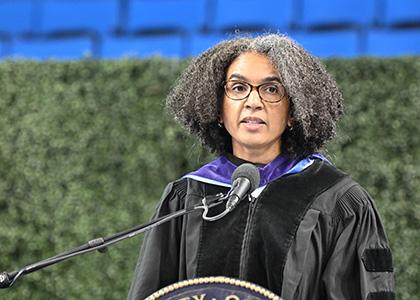
Optimism and joy filled UCLA’s Pauley Pavilion on May 16, as more than 1,000 people gathered for UCLA School of Law’s 74th commencement ceremony. The classmates, colleagues, family, friends, and mentors joined together in celebration of the law school’s Class of 2025.
“I’m here because of you. You are a remarkable group. You came here from a remarkable array of backgrounds and experiences, as leaders, collaborators, creators, public servants, and scholars. And remarkable as you are, you have also weathered a series of remarkable events.”
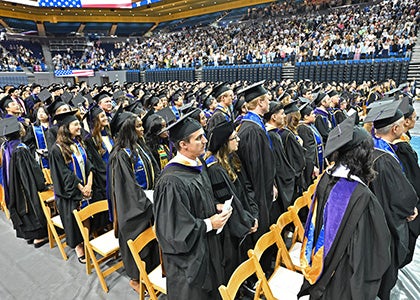 “Seventy-five years later, we are living that dream.” This included the hundreds of hours of pro bono work that the graduates undertook, such as helping their neighbors recover from the devastating wildfires that swept through parts of Los Angeles earlier in the year. “Today’s graduates: You are the ones who are carrying on our tremendous legacy,” he said.
Other speakers included graduating students Ania Korpanty, on behalf of the J.D. class; Torge Urbanski, for the LL.M. grads; Kevin Bataclan Cunanan, for the M.L.S. class; and Nicole Wassef Morgan, the 3L class president. Terrence Li, a J.D. graduate, sang “The Star-Spangled Banner.”
Justice Leondra Kruger of the Supreme Court of California delivered the keynote address. “Congratulations! What a privilege and honor it is to have this chance to celebrate with you,” she said to the graduates.
“I’m here because of you. You are a remarkable group. You came here from a remarkable array of backgrounds and experiences, as leaders, collaborators, creators, public servants, and scholars. And remarkable as you are, you have also weathered a series of remarkable events.” She noted that their time in law school started in the COVID-19 pandemic and ended shortly after the fires. “In the midst of so much uncertainty and fear, you came together in support of one another and to lend a helping hand to all those affected by the destruction. Your kindness and care for each other and for your community attests to the remarkable people you are.”
Kruger stressed that an array of possibilities arise with the degrees that the graduates had earned, and she traced her own journey from law student to advocate in the U.S. Supreme Court. “With each of these experiences, I remember being bowled over again and again by the extraordinary opportunities we have as lawyers to counsel people facing life’s most challenging circumstances, to give voice to their claims to justice under the law, to be active participants in resolving some of the most pressing questions affecting our communities and our country.”
With a nod to current social and political uncertainty and divisions, she offered “one small piece of practical advice: In a profession that is known for being full of big talkers, there is a practical and moral value to listening.” The best lawyers, she said, are “ones who can sit at a table full of people with different points of view and find a way to navigate the disagreements in a way that brings others along instead of turning them away.”
In reiterating the challenges of the moment, she said, “This is also a time when our communities need people who are able to bridge differences, who work to unite rather than divide. I know that’s no small task, and the burden certainly does not fall to you alone, but I submit to you that one first and important step in that direction is to try to model in your work and in your life what it means to listen to other perspectives respectfully, to speak with civility, and to treat others with dignity. … On the road ahead, I wish you both the courage to speak out and the humility to listen.”
Watch the full commencement below and read more about the event.