A special symposium celebrated Professor Gómez's retirement and honored her groundbreaking career and tremendous impact on Critical Race Studies, UCLA School of Law, and legal and academic communities at large.
Symposium Agenda
View video of the symposium here.
3 p.m. — Welcome
Remarks from
- Michael Waterstone, Dean of UCLA School of Law
- Cheryl I. Harris, Vice Dean for Community, Equality and Justice; Rosalinde and Arthur Gilbert Professor in Civil Rights and Civil Liberties
- Uriel Saldivar Esteban, J.D. Candidate '25 & Community Service Chair, UCLA Latinx Law Students Association
3:30 p.m. — Manifest Destinies: The Making of the Mexican American Race
Panelists will discuss Professor Gómez's groundbreaking 2007 text, which has been established as an essential resource for understanding the complex history of Mexican Americans and racial classification in the United States.
- Moderator: Jerry Kang, Distinguished Professor of Law; Founding Vice Chancellor for Equity, Diversity and Inclusion (2015-20), UCLA School of Law
- Genevieve Carpio, Associate Professor, César E. Chávez Department of Chicana/o Studies, UCLA
- Nicholas Espíritu (Law '04), Deputy Director, Legal, National Immigration Law Center
- Casandra Salgado (Ph.D. Sociology '19), Assistant Professor, Sociology, Arizona State University
4:30 p.m. — Break
4:45 p.m. — Inventing Latinos: A New Story of American Racism
Panelists will discuss Professor Gómez's most recent book exploring the impact of Latinos’ new collective racial identity on the way Americans understand race.
- Moderator: Aslı Ü. Bâli, Professor of Law, Yale Law School
- Walter Allen, Distinguished Professor of Education, Sociology, and African American Studies; Allan Murray Cartter Chair in Higher Education, UCLA School of Education & Information Studies
- Sherene H. Razack, Chair and Distinguished Professor, Gender Studies; Penny Kanner Endowed Chair in Women's Studies, UCLA
- Saúl Sarabia (Law '96), Founder and Director, Solidarity Consulting
5:45 p.m. — Keynote by Laura E. Gómez, Rachel F. Moran Endowed Chair in Law
Introduction by Devon W. Carbado, The Honorable Harry Pregerson Professor of Law, UCLA School of Law (Read by Executive Director of the Critical Race Studies Program Jasleen Kohli, with additional remarks.)
6:30 p.m. — Reception and Dinner in Shapiro Courtyard
Remarks from
- LaToya Baldwin Clark, Professor of Law; Faculty Director, Critical Race Studies Program, UCLA School of Law
- Jasleen Kohli, Executive Director, Critical Race Studies Program, UCLA School of Law
CO-SPONSORS
Convening the foremost copyright scholars, practitioners, and industry leaders on emerging and pressing issues within copyright law — this year’s symposium focuses on AUTHORSHIP. Panelists will address authorship and AI, community authors and cultural property, and more.
Keynote by Andrew Foglia, Deputy Director of Policy and International Affairs at the U.S. Copyright Office.
Co-hosted with the McCarthy Institute, Sandra Day O’Connor College of Law at Arizona State University.
Symposium Agenda
Subject to change. Panel descriptions follow.
8:45 a.m. — Welcome by Mark P. McKenna, Vice Dean and Professor, UCLA School of Law, with Michael Waterstone, Dean of UCLA School of Law and David Franklyn, Executive Director of the McCarthy Institute
9 a.m. — Keynote by Andrew Foglia, Deputy Director of Policy and International Affairs, U.S. Copyright Office, with introduction by Douglas Sylvester, Dean Emeritus and Professor of Law, Sandra Day O’Connor College of Law at Arizona State University
10 a.m. — Panel: Corporate Authorship
11:15 a.m. — Break
11:30 a.m. — Panel: Authorship after Warhol
12:45 p.m. — Lunch
1:45 p.m. — Panel: Community Authors and Cultural Property
3:00 p.m. — Break
3:15 p.m. — Panel: AI and Authorship
Reception to follow
KEYNOTE REMARKS
- Andrew Foglia, Deputy Director of Policy and International Affairs, U.S. Copyright Office
- Moderator: Douglas Sylvester, Dean Emeritus, Professor of Law, Sandra Day O'Connor College of Law
UCLA School of Law is a State Bar of California-approved MCLE provider. This session is approved for 1.00 Hours of MCLE Credit.
PANELS
CORPORATE AUTHORSHIP, featuring
- Moderator: David Nimmer, Of Counsel - Irell & Manella LLP
- Paige Adamczyk, CHA Law Ethics - Attorney
- Betty An (Law '13), NBCUniversal - VP, Intellectual Property
- Jonathan Anschell, Executive Vice President and Chief Legal Officer, Mattel, Inc.; UCLA lecturer in law
- James Dowd, Partner - WilmerHale LLP
- John Paul Oleksiuk, Partner, Copyright and Trademark Litigator - Cooley
UCLA School of Law is a State Bar of California-approved MCLE provider. This session is approved for 1.25 Hours of MCLE Credit.
AUTHORSHIP AFTER WARHOL, featuring
- Moderator: Eugene Volokh, UCLA Gary T. Schwartz Distinguished Professor of Law
- Elana Nightingale Dawson, Partner - Copyright, Litigation and Trial, and Technology - Latham & Watkins
- Bobby Ghajar, Intellectual Property Litigation Partner - Cooley
- Christopher Jon Sprigman, New York University Murray, and Kathleen Bring Professor of Law
- Haochen Sun, Faculty of Law - University of Hong Kong
- Timothy Yoo, Partner - Bird Marella
UCLA School of Law is a State Bar of California-approved MCLE provider. This session is approved for 1.25 Hours of MCLE Credit.
COMMUNITY AUTHORS AND CULTURAL PROPERTY
- Moderator: Trevor Reed, ASU Sandra Day O'Connor Professor of Law
- Aman Gebru, University of Houston Law - Assistant Professor
- J. Osei-Tutu, FIU College of Law - Associate Dean, Professor of Law
- Aaron Jones, Tulalip Tribe of Washington
- Mitch Stoltz, Electronic Frontier Foundation - IP Litigation Director
- Yuanxiao Xu, Counsel - Creative Commons
UCLA School of Law is a State Bar of California-approved MCLE provider. This session is approved for 1.25 Hours of MCLE Credit.
AI and AUTHORSHIP, featuring
- Moderator: Gary Marchant, ASU Regents and Foundation Professor of Law
- Nathaniel Bach, Partner - Manatt, Phelps & Phillips, LLP
- Ian Ballon, Intellectual property and internet litigator - Greenberg Traurig, LLP
- Danielle W. Bulger, Associate - ArentFox Schiff LLP
- Angela Dunning, Partner - Cleary Gottlieb Steen & Hamilton
- Krishna Sood, Microsoft - Assistant General Counsel and IP group senior leader
UCLA School of Law is a State Bar of California-approved MCLE provider. This session is approved for 1.25 Hours of MCLE Credit.
READING MATERIALS
- Richard Prince, Instagram, and Authorship in a Digital World
-
20-842 - AMO Development, LLC et al v. Alcon Vision LLC, et al
-
Pooh-Poohing Copyright Law’s “Inalienable” Termination Rights
-
OpenAI Seeks to Dismiss Parts of The New York Times’s Lawsuit
-
Voice actors and generative AI: Legal challenges and emerging protections
PLATINUM SPONSORS



GOLD SPONSORS


Outstanding new members boost law school faculty and administration in 2023–24.
New Tenure-Track Faculty
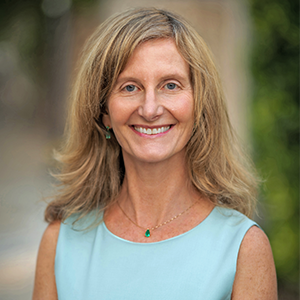 ARIELA GROSS
Distinguished Professor of Law
New Senior Leaders
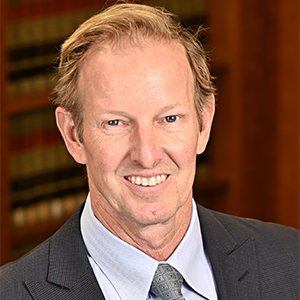 TIMOTHY CASEY
Director of Curricular Administration and Professor from Practice
Tim Casey will teach Professional Responsibility and provide support for the non-senate law faculty. He started his teaching career at Columbia Law School, where he established a Criminal Practice Clinic and received the Presidential Award for teaching. He also held an appointment as a professor of law at Case Western Reserve University. And he received a Fulbright award for research and teaching in Buenos Aires, Argentina.
Most recently, Casey served as the director of the STEPPS Program and professor in residence at California Western School of Law, where he oversaw an innovative program in legal ethics and lawyering skills. He also was a visiting professor at the University of San Diego School of Law. Before entering legal academia, he practiced law as a public defender in New York City.
Casey is an internationally recognized expert in experiential legal education. His research interests include legal ethics, surveillance and civil liberties, problem-solving courts and experiential pedagogy. He is a co-author of Legal Ethics in the Practice of Law (Carolina Academic Press, Fifth Edition, 2019), and his scholarship has appeared in law reviews including UC Davis Law Review and SMU Law Review. He serves as chair of the Legal Ethics Committee of the San Diego County Bar Association, a board member for local and international non-profit organizations, and a member of the editorial board for the peer-reviewed Clinical Law Review.
He received his B.A. from Boston College, J.D. from UC Law San Francisco and LL.M. from Columbia Law School.
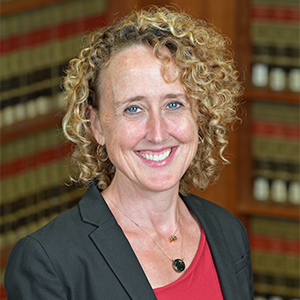 HANNAH GARRY
Executive Director of the Promise Institute and Professor from Practice
Hannah Garry joins UCLA Law as executive director of the Promise Institute for Human Rights and professor from practice. Garry has devoted her legal career to seeking justice and accountability for human rights abuses and atrocity situations across the globe, while making the U.S. a destination for the study and practice of human rights law.
She joins UCLA Law from USC Gould School of Law, where she was clinical professor of law and founding director of the International Human Rights Clinic for 12 years. Her areas of teaching and scholarship include international criminal law, transitional justice, international human rights law and international refugee law. She has supervised student attorneys in the clinic on cases and projects nationally and internationally that address atrocity crimes, refugee rights, fair trial rights, gender justice, human trafficking and systemic racism.
Garry’s career as an international human rights advocate, scholar and teacher took root when she was a graduate student at Oxford University’s Refugee Studies Centre. After graduation, she was hired by Oxford as a field researcher visiting refugee camps throughout Uganda and Kenya for two years where she witnessed and documented first-hand the abuses refugees endure in exile while under the protection of the international community.
Garry has held many other academic and expert legal advisor positions, including in international criminal courts and leading human rights organizations, and she has been quoted widely in major media outlets. Last year, she was a Fulbright Scholar at the University of Oslo Law’s PluriCourts Centre in Norway.
Garry earned her J.D. from UC Berkeley and master’s in international affairs from Columbia University.
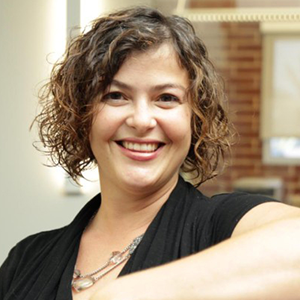 MELISSA GOODMAN
Executive Director of the Center on Reproductive Health, Law, and Policy
Melissa Goodman joins UCLA Law as the inaugural executive director of the Center on Reproductive Health, Law, and Policy after a five-year tenure as the legal and advocacy director for the ACLU of Southern California. There, Goodman led 60 attorneys across Southern California and oversaw the department’s visioning and strategy, strategic planning, intersectional issue and cross-team collaboration and resource allocation. In doing so, she helped lead statewide legislative, electoral and organizing strategy. She also co- chaired the national ACLU’s Gender Justice Task Force.
Goodman previously spent a decade as the ACLU SoCal’s Audrey Irmas Director of the LGBTQ Gender and Reproductive Justice Project, and as a senior litigation and policy counsel for reproductive and LGBTQ rights at the New York Civil Liberties Union. In those roles, she led and participated in reproductive justice, LGBTQ and gender equity litigation, as well as policy advocacy campaigns. Along the way, Goodman led or co-counseled an array of high-profile cases, including those involving pregnant unaccompanied immigrant minors; gay, bisexual and transgender prisoners; and same-gender couples.
Goodman clerked for Judge Frederic Block of the U.S. District Court for the Eastern District of New York. She earned her B.A., magna cum laude, from New York University and her J.D. from NYU School of Law.
New Lecturers
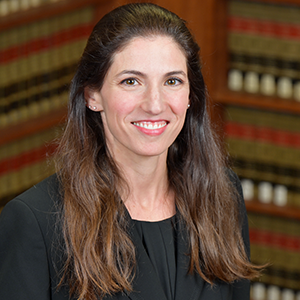 EMILY CHURG
Lecturer in Law
Emily Churg teaches Legal Research and Writing. She previously practiced complex commercial litigation at WilmerHale and ran her own bar exam preparation company. She has also taught legal writing at USC Gould School of Law and undergraduate writing at Arizona State University.
She earned her B.A., with honors, from UC Santa Cruz; her Ph.D. in rhetoric, composition and linguistics from Arizona State; and her J.D., Order of the Coif, from UC Davis School of Law. After law school, she clerked for Judge S. James Otero of the U.S. District Court for the Central District of California.
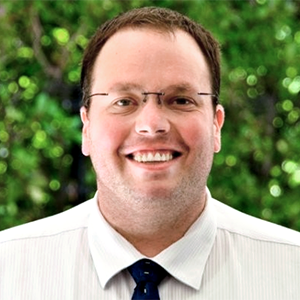 THOMAS WANEBO
Lecturer in Law
Thomas Wanebo teaches Legal Analysis, Writing, and Research for LL.M. students. He currently works as a trial attorney at Neighborhood Legal Services of Los Angeles County, defending low-income families against eviction. He began his career as a litigation associate at Irell & Manella in Los Angeles.
Wanebo earned his B.A. from Colorado State University and his J.D. from UCLA Law, where he was a senior editor of the UCLA Law Review. His publications include the article “Remote Killing and the Fourth Amendment: Updating Constitutional Law to Address Expanded Police Lethality in the Robotic Age,” which appeared in the UCLA Law Review.
New Fellows
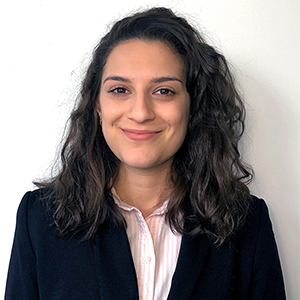 MELODI DINCER
UCLA Institute for Technology, Law and Policy Fellow
Melodi Dincer will join UCLA Law in January 2024 as a fellow with the UCLA Institute for Technology, Law and Policy. Her work focuses on helping social movements fight algorithmic violence and build transformative futures.
She was previously an appellate advocacy fellow with the Electronic Privacy Information Center and has been a legal research fellow and clinical supervising attorney at NYU School of Law, where she earned her J.D. She earned her B.A. from Brown University.
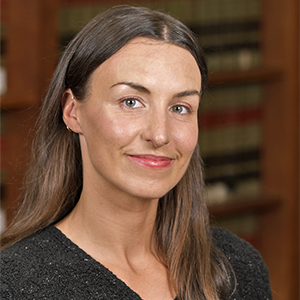 RUTHIE LAZENBY
Shapiro Fellow in Environmental Law and Policy
As the Shapiro Fellow in Environmental Law and Policy for 2023–25, Ruthie Lazenby will be focusing on energy law and regulation. She was previously a staff attorney in the Environmental Justice Clinic at Vermont Law School and a legal fellow in the environmental justice program at New York Lawyers for the Public Interest.
She earned her B.A. from Wesleyan University and her J.D. from Yale Law School, where she was an editor of the Law and Political Economy Blog.
From our early use of video recordings to review mock clinical trials in the 1970s to the recent founding of our Institute for Technology, Law and Policy, UCLA Law has been on the cusp of every wave of technology innovation throughout our history. Today, the law school boasts a full menu of classes and other programs that address the top issues of our time: artificial intelligence, cybersecurity and much more.
Maria Abesa ’17, senior counsel at Square Enix
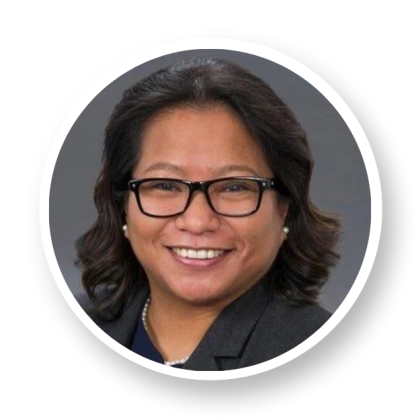
When Maria Abesa ’17 was a student at UCLA Law, she was busy. Busy working in the San Bernardino Superior Court. Busy earning a joint J.D. and M.P.P. degree through UCLA’s Law and Public Policy program. Too busy, in fact, to imagine that she would actually land her dream job in just a few years. But she did, and she couldn’t be happier.
The lifelong video game fan (top of her list: the original Xbox release Fable) works as senior counsel at the video game company Square Enix in El Segundo, where the days are jammed but never dull. “There’s nothing routine about it at all,” Abesa says. “I have to take whatever comes across my desk. That can be anything from licensing agreements, marketing things, HR things. It’s kind of a jack-of-all-trades situation, but that’s what makes it fun.”
Through it all, her UCLA Law experience keeps her grounded. “When I’m feeling a little overwhelmed or like I’m in over my head,” she says, “I just remind myself, Hey, you were very well educated by some great professors at one of the best law schools in the world. You’ve got this! You can figure this out.”
One thing she figured out while at UCLA Law is something she places pretty much above everything else in importance: networking. Like any good game, her career story has its twists and turns, but the basic trip took her from the law school’s On-Campus Interview (OCI) process to Sidley Austin in Century City, where she was mentored by Matthew Thompson, a board member of the Ziffren Institute for Media, Entertainment, Technology and Sports Law. At the firm, Abesa was never shy about discussing her love of video games, which led to a key connection at Square Enix and, eventually, to her current job.
Winner!
But for Abesa, who continues to remain connected to people across her journey, that was hardly game over.
Networking, she says, is “a resource you can draw on for a very long time. And you’ll make some friends, which is always cool. … I mean, I’m making video games with my friends for a living. How does it get any better than that?”
Erich Andersen ’89, general counsel and head of trust and safety at ByteDance

TikTok is one of the largest mobile entertainment platforms today, with more than a billion users all over the world. The sheer scale of the platform represents a massive legal challenge for Erich Andersen ’89, general counsel and head of trust and safety for ByteDance, TikTok’s parent company.
At ByteDance, Andersen, a Double Bruin, manages the global legal team as well as the corporate social responsibility and trust and safety functions. But his current work is just the latest stop in a more than three-decade career at the intersection of law and technology.
After graduating without a clear career path, Andersen first clerked for two federal judges, then considered becoming a commercial litigator and began working at Davis Wright Tremaine in Seattle in 1991. “I started my law practice during the early days of Microsoft, Amazon and Starbucks, when Seattle’s vibrant startup community was just getting started,” he says. “I quickly fell in love with the work I was doing for tech companies in the area.”
Four years later, Andersen started his 24-year tenure as in-house counsel at Microsoft, where he served as deputy general counsel for the Windows and Office businesses, led the legal and government affairs for Microsoft EMEA in Paris and became a corporate vice president and global head of intellectual property. Then, in 2020, he moved over to ByteDance as general counsel.
Andersen certainly benefited from entering the tech world at the start of the internet boom, but he stresses that there are still amazing opportunities for lawyers who are interested.
“Technology is ubiquitous in our world today,” he says. “Retail sellers are tech companies, travel agencies are tech companies, entertainment companies are tech companies, auto companies are tech companies, and governments run on technology. Technology is part of the fabric of our world.”
So how can law students get there? “Commit to learning the foundations of intellectual property and data privacy laws,” he says. “It’s also really helpful to understand the technology and not just the relevant law. Take some computer science and engineering classes, and don’t shy away from learning opportunities once you are in practice. Read about tech, learn about new developments and test the patience of the engineers with questions when the opportunity arises.”
Andrea Cheuk ’10, director and associate general counsel at Meta

For the first five years of her legal career, Andrea Cheuk ’10 worked in the San Francisco office of Latham & Watkins. Although she was close to Silicon Valley, she didn’t center her practice on technology. Instead, she says, “I focused on building a strong skill set, laying a good foundation and developing my network.”
As she built her connections and professional toolkit, Cheuk’s colleagues and mentors encouraged her to consider in-house jobs at top tech companies. “I did a lot of informal interviewing,” she says. “It was hard to get my foot in the door.”
But her persistence and positive spirit eventually paid off. In 2015, she got a job at Tesla thanks to her “UCLA Law connections, specifically from alumnae who are active in the UCLA LEAD network” – the law school’s alumnae-led network that advances women in law. Back then, she says, “Tesla had a small and scrappy legal department. I got to learn and try everything, from bet-the-company litigation, to commercial disputes, regulatory actions and even privacy and data security issues.”
That on-the-job training has served her well at her current company, Meta, where she has worked since 2018. Now a director and associate general counsel, she advises on an array of legal issues that arise in the course of developing, building and shipping new products and experiences to users. “It’s a very cross-functional role,” she says. “I work with product managers, data scientists, engineers, policy experts and comms teams. I’m really embedded in the business, and that seems to be the best way to provide thoughtful and practical legal advice. It’s fascinating work.”
So how can lawyers who are interested in technology careers fulfill their promise? Build a strong legal foundation, Cheuk says, including learning about developments in privacy and data protection laws. Well, that, and one more key thing: Connect with fellow UCLA Law alumni.
“At every step of my career, alums have helped me,” she says. Connect with them. Get to know them. Learn about what they do. After all, she adds, “You can find them at most of the top tech companies in the world.”
Josh Green ’80, lawyer, venture capitalist and entrepreneur

For double Bruin Josh Green, B.A. ’77, J.D. ’80, a career in the tech sector was not always in sight. “My plan before law school was to go into politics,” he says, “but a summer job during law school in the Bay Area caused me to fall in love with Silicon Valley and entrepreneurship.” Flash forward more than four decades, and Green has become a tech-world fixture as a lawyer, venture capitalist and entrepreneur.
Following a successful decade and a half at Brobeck, Phleger & Harrison, where he handled high-tech venture financings, IPOs and mergers and acquisitions — some of the most exciting deals in Silicon Valley when the industry was in its early stages of revolution— Green was considering his next act. He recalls, “As a child, I loved to build things, and I realized I wanted to do that with my career as well.”
In 1995, he joined the fledgling Venture Law Group. “VLG was like a startup, and part of our strategy was to do the opposite of what a typical law firm would do,” he says. “For example, we gave a profit interest to every employee, including the receptionists.” The firm also focused “solely on startups with an equity model that ensured our incentives were aligned with entrepreneurs.”
Green eventually moved into venture capital and entrepreneurship, first at Mohr Davidow Ventures, where he focused on cleantech and life sciences investing, and then at Carbon, a 3D printing startup, where he worked as general counsel and in corporate development until 2022.
Now, Green is an advisor to startups as well as a lecturer at UCLA Law School. He looks back on his fruitful career and says that UCLA Law taught him how to discover opportunities and chart his course. “On the very first day, a professor told us, essentially, ‘We are going to rewire your brain and teach you a very different way of thinking,’” he says. “That really stuck with me and enabled me to develop a rigorous approach to problem solving and counseling that has benefited me throughout my career.
“People focus way too much on what to think, as opposed to learning how to think,” he adds. “To become a trusted advisor, a consigliere, to your client, you need to immerse yourself in their shoes and understand how to meet their objectives.”
Brian Lee ’96, co-founder and managing director of BAM Ventures

Even though Brian Lee ’96 graduated from UCLA Law and started his career working in tax law in the Los Angeles office of Skadden, Arps, Slate, Meagher & Flom, his long-held interest in technology and the internet led to tremendous success as an entrepreneur – many times over. “I was always looking at the future and what was coming next,” says Lee, a double Bruin. “I can remember getting on the internet in the early 1990s and thinking that it was going to change the world.”
Lee was definitely part of that change. After they graduated, Lee and his UCLA Law classmate Brian Liu ’96 would meet for lunch – Liu was working at Sullivan & Cromwell – and they started exploring ideas for internet businesses. Eventually, they founded LegalZoom in 2001, which transformed how legal services are delivered and made the law more accessible to millions of people.
But the entrepreneurial itch can be persistent, and by 2009, Lee had co-founded ShoeDazzle, a fashion subscription service, with his wife, Mira, and others, including Kim Kardashian. And in 2012, he co-founded the Honest Company, a digital-first retailer of eco-friendly and natural baby products and home goods, with Jessica Alba.
In addition to turning those businesses into immense successes, Lee has shifted to angel investing as a way of, he says, “putting capital back into the entrepreneurial ecosystem.” In 2014, he co-founded BAM Ventures, an early stage investor in consumer companies from beauty brands to gaming tech platforms, where he is managing director.
While Lee admits that he started at UCLA Law not knowing exactly what he wanted to do with his career, “I had heard that a legal education can only help you,” – especially, he notes, at a time when “technology is opening new worlds for enterprises, and creative attorneys can be tremendously helpful in turning opportunities into businesses.”
And it all started with becoming a lawyer. “I learned how to analyze issues and foresee problems. I learned how to articulate my thoughts better, to write better – to communicate better,” he says. “A law degree is terrific preparation for an entrepreneur or a business career. I am really happy I went to UCLA Law!”
Nick Lum ’07, founder and CEO of BeeLine Reader

One UCLA Law alumnus is using cognitive science together with his knowledge of patent and intellectual property protection to make screen reading easier and more effective. Nick Lum ’07 is the founder and CEO of BeeLine Reader, a venture-stage company that he says uses “a simple cognitive trick — an eye-guiding color gradient — to pull your eyes through long blocks of text.” BeeLine’s proprietary technology helps readers consume text with more speed and focus and less screen fatigue. The company recently earned an award from Hewlett Packard for accelerating digital equity.
Lum had the idea for BeeLine’s technology even before he came to UCLA Law as a student, but it would be several years before he made the jump to being an entrepreneur. After graduating in 2007, he moved to Silicon Valley to do tax law at McDermott, Will & Emery. He had been working on the idea for BeeLine on the side, and he says that “when the iPad caught on, I thought it was time to see if my idea for improving reading on screen had any traction in the real world.”
Relying on his strong legal experience and knowledge of patent law — including a pivotal law school course — he says he “realized that my idea for making reading on screen easier could be something worth patenting and pursuing as a business.”
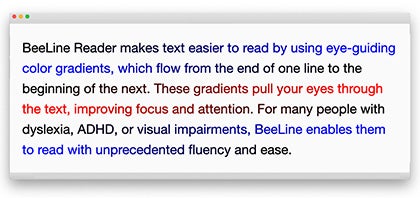 Lum founded the company in 2013, securing patents for tools and technologies and assembling a small team. In the decade since, BeeLine has expanded its reach and built partnerships that include such education and reading platforms as Blackboard and Perlego, digital publications such as LAist and schools across the country. Today, more than 10 million students around the world have access to BeeLine’s service, which is especially helpful for people with dyslexia, ADHD or visual impairments.
Working as a corporate lawyer for tech firms, Lum says, offers great opportunities to learn about technology. “You develop a good business sense and a good network,” he says. “You get to see the inner workings of some of the most sophisticated companies in the world.”
What’s more, he notes, the proliferation of global technology enterprises calls for adept and engaged lawyers at every turn. “The stakes can be enormous,” he says. “Tech companies need great lawyers when interfacing with corporate partners and customers that are larger and more globally distributed than ever before.”